

Brush Removal in DFW: How to Reclaim Overgrown and Neglected Outdoor Spaces
Brush Removal in DFW: How to Reclaim Overgrown and Neglected Outdoor Spaces
Every property has that one area. Maybe it is the back corner of the yard where vegetation has been accumulating undisturbed for years. Maybe it is the fence line where Ligustrum and Privet have grown into a dense, impenetrable wall. Maybe it is an area along the side of the house that was never properly landscaped and has slowly become a tangle of overgrown shrubs, volunteer trees, and invasive groundcover that now reaches the roofline. Maybe it is a property you recently purchased where the previous owners simply stopped maintaining an entire section of the yard at some point in the distant past.
Whatever the specific situation, the story is the same for homeowners across Keller, Southlake, Haslet, Saginaw, Roanoke, Trophy Club, and the surrounding DFW communities: overgrowth happens, it accelerates faster than most people expect, and at a certain point it crosses the threshold from a maintenance issue into a legitimate brush removal project that standard lawn equipment and a weekend of effort cannot adequately address.
Professional brush removal is the service that brings overgrown, neglected, or vegetation-choked areas of a DFW property back under control — and in the North Texas climate, where plant growth is aggressive, invasive species are prolific, and certain vegetation practically sprints between seasons, it is a more commonly needed service than most homeowners initially expect when they move into a property with any significant outdoor space.
At Lone Star Mow Co, brush removal is one of the ways we help DFW homeowners reclaim outdoor spaces they have stopped using, address the vegetation growth that standard maintenance cannot keep pace with, and restore overgrown areas to a condition where ongoing lawn care and landscaping are actually possible.
What Brush Removal Actually Is — and What It Isn't
Brush removal is frequently misunderstood as either simple yard cleanup or full-scale land clearing, when in reality it occupies a specific and important middle ground between those two categories.
Standard lawn maintenance — mowing, edging, trimming, bed cleanouts — addresses vegetation that is operating within the normal range of a maintained yard. These are services that keep a well-cared-for property looking its best on an ongoing basis.
Full land clearing is a large-scale demolition of all vegetation on a site — typically for construction, development, or significant grade work — and involves removing everything down to the soil surface, including large trees and stumps.
Brush removal sits between those two extremes. It is the targeted removal of dense, overgrown, undesirable, or invasive vegetation that has grown beyond what standard maintenance can address — without necessarily clearing every living thing from the area. The goal of professional brush removal is to eliminate the problematic overgrowth, expose and restore usable space, and create a clean baseline from which normal landscape maintenance or new planting can begin.
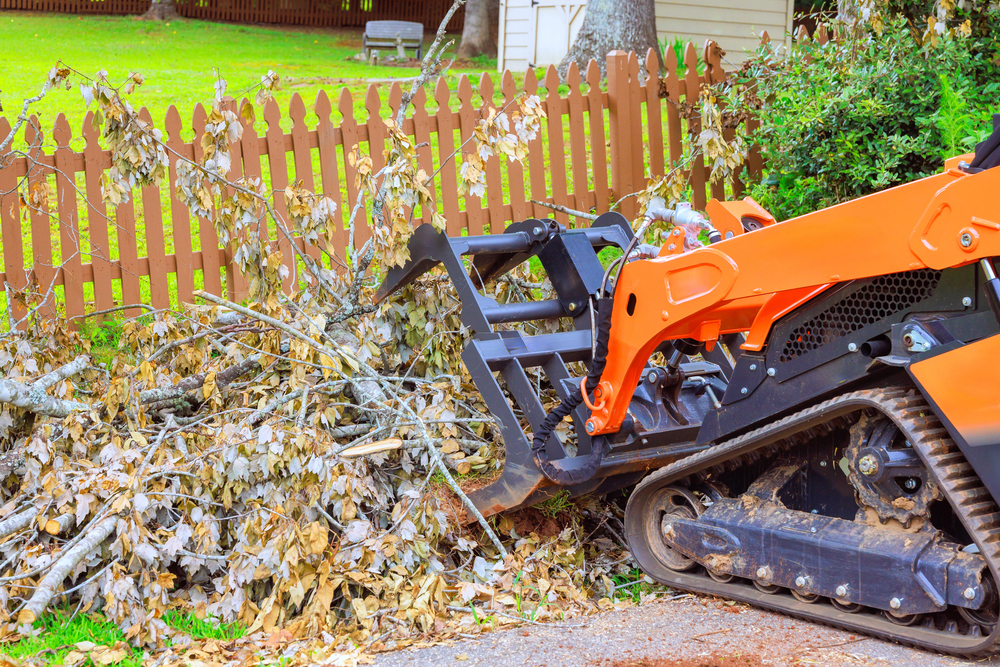
In practical terms for DFW residential properties, brush removal typically involves clearing dense stands of invasive shrubs and small trees, removing overgrown vegetation along fence lines and property boundaries, cutting back heavy accumulations of woody growth in neglected areas, clearing tangled undergrowth from beneath established trees, eliminating large volumes of storm debris and downed material, and hauling all removed vegetation off the property entirely.
Why Overgrowth Happens So Fast in the DFW Area
North Texas is one of the more aggressive environments for unwanted vegetation growth in the entire country, and understanding why helps explain why brush removal is such a commonly needed service across the DFW area.
The growing season is exceptionally long. DFW's climate supports active plant growth for roughly nine to ten months of the year. Vegetation that is not actively managed has an enormous window to establish itself, spread, and develop the kind of root systems that make it genuinely difficult to remove. An area that was lightly overgrown in the spring can be impenetrable by fall if it goes without attention.
Invasive species in North Texas are extremely aggressive. The three most common invasive plants that drive brush removal needs on DFW residential properties are Ligustrum, Privet, and Chinese Tallow. All three are prolific seed producers, grow rapidly, tolerate a wide range of soil and light conditions, and are capable of spreading across a neglected area with alarming speed. Ligustrum in particular — a glossy-leafed shrub with clusters of small dark berries — is found on virtually every established DFW property and will grow from a manageable shrub into a small tree that blocks light and chokes out adjacent plants within a few seasons of being ignored. These species cannot simply be cut back. Effective brush removal requires addressing the root system, because cutting at the surface without treating or removing roots results in regrowth that is often more vigorous than the original plant.
Fence lines are natural vegetation corridors. In DFW neighborhoods, fence lines accumulate wind-dispersed seeds from multiple directions and are frequently the last areas that homeowners address during routine maintenance. Over time, the space along a fence line becomes a nursery for exactly the kinds of fast-growing, invasive species that require professional brush removal to correct. This is especially true for wood fences that provide physical support for climbing and vining vegetation that can eventually destabilize or damage the fence structure itself.
Neglected areas escalate quickly. In the DFW climate, a yard section that is out of sight and out of mind for even one full growing season can advance from manageable overgrowth to a dense, multi-layered thicket that resists normal cutting tools and requires commercial-grade equipment to clear. This is the most common scenario homeowners describe when they contact Lone Star Mow Co for brush removal services — a corner or section of the property that was deprioritized for a season or two and then became a project.
The Problems That Overgrown Brush Creates on DFW Properties
Brush removal is not just about appearance. Dense, unmanaged vegetation on a DFW property creates a range of real, practical problems that compound over time if left unaddressed.
Pest habitat. This is one of the most serious concerns for DFW homeowners dealing with overgrown brush. Dense, tangled vegetation provides exactly the kind of dark, protected, concealed environment that rodents, snakes, fire ants, and a variety of insects use for nesting and harborage. In Texas, where venomous snakes and fire ants are genuinely present threats — not hypothetical ones — the pest harboring capacity of dense brush against or adjacent to the home is a legitimate safety concern. Professional brush removal eliminates this habitat.
Fire risk. During the extended dry periods that DFW regularly experiences in late summer and early fall, accumulated dry brush becomes a significant fire hazard. Dense, dry woody vegetation adjacent to a home can ignite from wind-driven sparks or adjacent fires and burn rapidly. Brush removal substantially reduces this risk, particularly for properties with larger lots, wooded rear areas, or sections of unmaintained vegetation adjacent to structures.
Structural damage from invasive root systems. Volunteer trees and invasive shrubs that establish themselves against fences, along foundation perimeters, under decking, and adjacent to outbuildings can cause structural damage as their root systems expand and their above-ground portions grow in weight and leverage. What starts as a small volunteer tree in the corner eventually becomes a root system pushing against a fence post, lifting pavers, or infiltrating a drainage line. Early brush removal prevents this progression before it reaches the point of structural intervention.
Loss of usable outdoor space. Every square foot of a DFW property that is occupied by uncontrolled brush is a square foot that is not serving the homeowner. Backyard spaces that could be used for gathering, play, storage, or additional landscaping are rendered completely inaccessible by dense overgrowth. Brush removal reclaims that space and restores the full usable footprint of the property.
Reduced property value and curb appeal. Visible overgrowth — particularly along the street-facing side or front corner of a property — communicates neglect regardless of how well the rest of the yard is maintained. In DFW communities with active real estate markets and HOA standards, untreated brush visible from the street can trigger compliance notices, impact appraisals, and affect how potential buyers perceive the property.
What Professional Brush Removal Looks Like at Lone Star Mow Co
Professional brush removal is physically demanding, requires the right equipment for the specific type and density of vegetation being cleared, and must be executed with enough judgment to identify and preserve any desirable plants in and around the removal area. It is not a job that a standard lawn maintenance visit can accommodate — it is a dedicated service with its own process and its own set of requirements.
Property assessment. Every brush removal project begins with a clear-eyed assessment of what is present, how dense and extensive the overgrowth is, what equipment is needed for the specific vegetation types involved, and whether any plants in the area should be preserved rather than cleared. In DFW landscapes, this step often identifies a mix of genuinely invasive and problematic vegetation alongside established trees and desirable plantings that need to be worked around carefully.
Clearing the overgrowth. Commercial-grade cutting and clearing equipment — not the residential tools available at a hardware store — is what professional brush removal requires for dense, established overgrowth. Woody stems that have been growing for multiple seasons resist standard trimmers and require equipment capable of handling material well beyond what normal landscape maintenance encounters. The clearing process works from the exterior of the dense growth inward, progressively opening up the area while identifying and protecting anything worth keeping.
Addressing invasive root systems. For the invasive species most common to DFW brush removal projects — particularly Ligustrum, Privet, and Chinese Tallow — cutting at the surface is only the first step. These plants have deep, resilient root systems that regenerate aggressively if not addressed. Effective professional brush removal treats cut stumps appropriately to prevent regrowth, because brush that returns from the root system does so with greater vigor and density than the original growth.
Complete debris removal from the property. All cleared vegetation, woody debris, cut material, and accumulated organic matter is collected and removed from the property entirely as part of the service. DFW homeowners should never be left with a cleared area surrounded by piles of debris that still need to be dealt with. Complete haul-off is part of what separates a professional brush removal service from a DIY clearing attempt that creates a different kind of problem — a large volume of vegetation waste with nowhere to go and no easy way to dispose of it.
When DFW Homeowners Need Brush Removal
Brush removal is not a service with a fixed seasonal schedule the way leaf cleanups or bed cleanouts are. It is a project-based service that becomes necessary when a specific situation on the property crosses the threshold where normal maintenance cannot address it. These are the most common situations that drive brush removal requests from DFW homeowners:
New property acquisition. Moving into a home in Keller, Haslet, or any other DFW community and discovering that one or more sections of the yard were simply abandoned by the previous owners is one of the most common brush removal scenarios we encounter. New homeowners frequently inherit years of accumulated overgrowth along fence lines, in rear corners, around outbuildings, and in areas where the previous landscape plan was never maintained or simply gave up. A professional brush removal service is how the new ownership starts fresh with a clean property.
Storm damage and debris accumulation. DFW experiences significant storms with high winds, particularly in spring and early summer. These events bring down branches, scatter debris, and accelerate the growth of opportunistic vegetation in disturbed areas. Properties that accumulate storm-generated debris without clearing it create the conditions for rapid brush establishment in those disturbed zones. Brush removal following significant storm events gets the property back to a clean baseline before vegetation takes hold.
Fence line restoration. This is one of the most specific and common brush removal requests we receive from DFW homeowners. A fence line that has not been maintained for multiple seasons often requires dedicated brush removal to clear the accumulated vegetation before normal edging and maintenance can resume. The combination of invasive shrubs, volunteer trees, and climbing vines that establishes along a DFW fence line in just a few years of neglect is a genuine removal project, not a maintenance task.
Preparation for landscape installation. Any new landscaping project — sod installation, landscape design, tree and shrub installation, bed creation — requires a clean, clear starting point. When the target area has existing overgrowth, brush removal is the necessary first step before new landscape work can begin. Installing fresh sod or planting new shrubs into an area that has not been properly cleared of invasive root systems is a recipe for those plants to struggle and fail.
Seasonal backyard clearing. Some DFW homeowners with larger lots, wooded rear areas, or properties adjacent to undeveloped land find that brush removal is a recurring annual or biannual service needed to keep aggressive vegetation from reclaiming specific sections of the property. Rather than letting overgrowth establish and then requiring a larger clearing effort, periodic brush removal keeps these areas from crossing the threshold where they become a significant project.
From Brush Removal to a Maintained, Usable Outdoor Space
The goal of professional brush removal is not just to eliminate the overgrowth — it is to create the foundation for what comes next. After brush removal, the cleared area can receive sod installation to establish a lawn surface where there was none, new landscape beds and plant installation to create intentional landscape structure, ongoing lawn maintenance to keep the cleared area from reverting to overgrowth, or simply restored access and usability for an outdoor space that was previously inaccessible.
At Lone Star Mow Co, brush removal is part of a complete approach to DFW property care. We serve homeowners throughout Keller, Southlake, Haslet, Saginaw, Roanoke, Trophy Club, Justin, Northlake, Rhome, Boyd, Azle, and Lake Worth with professional brush removal that handles the heavy lifting of clearing overgrown areas and prepares properties for the lawn and landscape work that follows. Whether you are dealing with a specific problem area or a property that needs a complete outdoor reset, we bring the equipment, the experience, and the work ethic to get it done right.

Ready to reclaim the overgrown areas of your DFW property?
Lone Star Mow Co provides professional brush removal for homeowners across the Dallas-Fort Worth area. Let us assess what needs to go, build a plan, and clear the way for the outdoor space your property deserves.

Ready to Transform Your property?

Find Us On


