

Brush Removal in North Texas: What It Involves, When to Do It, and Why It Matters
Brush Removal in North Texas: What It Involves, When to Do It, and Why It Matters
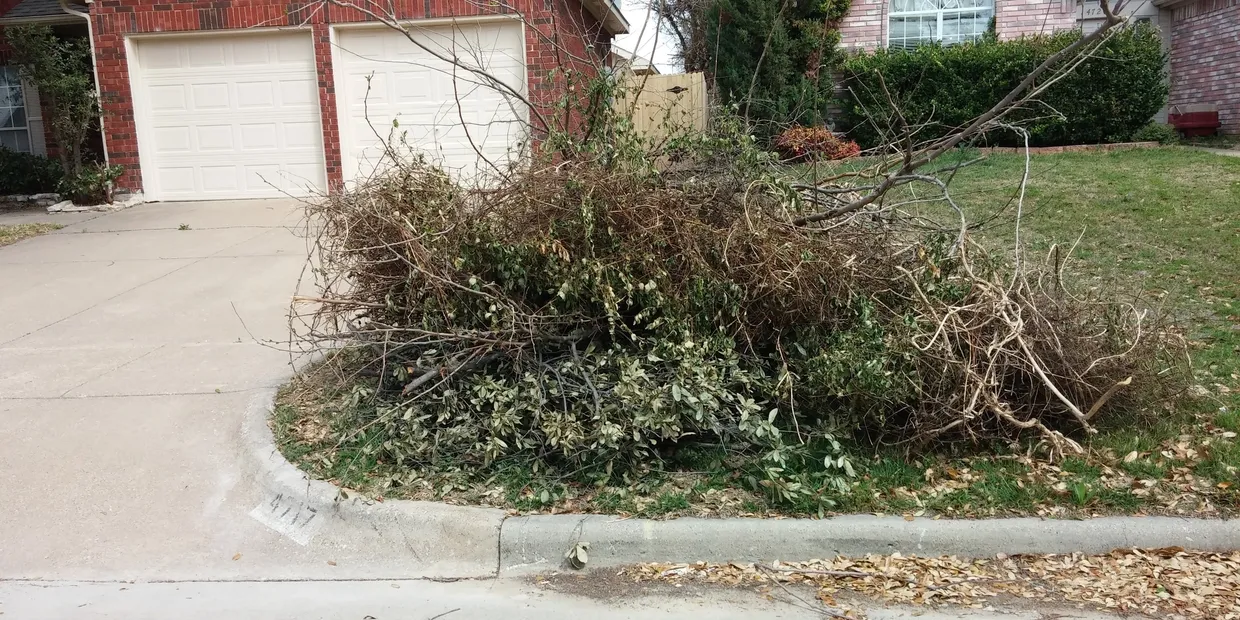
Brush removal occupies a different category of landscape service than the maintenance-focused work described in most of this blog series. It is not a routine, recurring service — it is a restoration service that addresses the specific overgrown, encroaching, or accumulated woody vegetation that develops over time on North Texas residential properties, particularly on the outer edges, fence lines, and creek or drainage adjacencies that routine mowing cannot reach.
The homeowners who need professional brush removal know it — the back fence line that has not been cleared in three to five years and now has four-foot Ligustrum volunteers mixed with Cedar Elm seedlings and Dewberry vines growing through the established fence structure. The drainage easement behind the property where native brush, Hackberry volunteers, and invasive Chinaberry trees have formed a dense thicket. The area between the fence and the back of the property where seasonal flooding has deposited seeds from upstream that produced the decade's worth of mixed woody growth now present.
What Brush Removal Actually Involves
Professional brush removal is the combination of clearing, cutting, and debris removal that restores access to, usability of, and visual clarity in overgrown property areas. The specific scope varies significantly by site:
Light brush removal addresses areas with one to three seasons of growth — woody seedlings and sprouts up to three to four feet in height, invasive grass species, and vine growth that has not yet developed significant structural roots or woody stems. This scope is manageable with hand tools, hand pruners, and standard string trimmer equipment with brush-cutting attachments.
Moderate brush removal addresses areas with three to seven seasons of growth — small trees up to four to six inches in trunk diameter mixed with dense undergrowth, established vine networks that have climbed into fence structures and adjacent vegetation, and invasive shrub species that have formed multi-stem clumps with established root systems. This scope requires chainsaw work, chipper or grinding equipment, and physical debris removal that generates meaningful volume.
Heavy brush removal addresses long-neglected areas with large-diameter trees that are growing in inappropriate locations, dense multi-species thickets with interlocked growth that requires sequential clearing from the outside in, and areas where the accumulated debris volume requires multiple loads for removal. This is the most labor-intensive and equipment-intensive brush removal category and is priced accordingly.
The North Texas Invasive Brush Problem
North Texas has a specific set of woody invasive species that dominate brush accumulation on neglected residential property areas:
Ligustrum — both Chinese Privet (Ligustrum sinense) and Japanese Privet (Ligustrum japonicum) — are the most prolific bird-dispersed invasive shrubs in North Texas landscapes. Birds eat the purple-black berries, excrete the seeds in fence lines and at property edges, and produce the dense, multi-stem thickets that dominate most untreated fence lines within three to five years of neglect. Ligustrum is difficult to control because cutting it back produces multiple new sprouts from the root system rather than killing the plant — complete removal requires either stump treatment with appropriate herbicide or complete root removal.
Chinaberry (Melia azedarach) is a fast-growing ornamental tree native to Asia that has naturalized aggressively across Texas. Seedlings grow rapidly to small tree size in a single season and are frequently present in untreated brush areas adjacent to established Chinaberry specimens. The trees produce large quantities of seed that remain viable in the soil for multiple years.
Hackberry volunteers (Celtis laevigata) germinate readily from seed throughout North Texas and grow quickly in fence lines and property edges where they are not addressed by routine maintenance. They are not invasive in the ecological sense — they are native species — but their tendency to establish in locations where they will eventually conflict with structures, fences, and utilities makes their control an important component of brush management.
Dewberry and Greenbrier vines — the thorny, low-growing vines that interweave through brush and fencing — are among the most physically challenging components of brush removal because their thorns make hand clearing slow and painful and their root systems make complete eradication difficult.
The Practical Reasons Brush Removal Matters Beyond Appearance
Overgrown brush creates specific risks that extend beyond the aesthetic problem of unkempt property areas:
Fire risk: Dense dry brush accumulation adjacent to structures is a genuine fire hazard in the dry conditions that are a regular feature of North Texas summer and fall. Brush fires that start in adjacent green spaces or from escaped controlled burns can travel through dry brush to structures that might otherwise be protected by clearance.
Pest habitat: Dense brush provides harbor for the rodents, snakes, and insects — including the fire ant populations that are endemic to this area — that are less likely to be present in well-maintained, cleared property areas. Brush adjacent to the home's foundation specifically creates pathways for rodent access that cleared perimeters prevent.
Drainage obstruction: Brush accumulation in drainage easements, creek adjacencies, and low-lying areas can obstruct the water movement that these features were designed to provide, contributing to the flooding and erosion problems that develop when drainage channels are not kept clear.
Property value: Overgrown brush that is visible from the street or from adjacent properties reduces property value by creating the appearance of neglect that reduces buyer interest and comparable value assessments.
Lone Star Mow Co's Brush Removal Service
Lone Star Mow Co provides professional brush removal for North Texas residential properties across the full scope range — from light fence line clearing to moderate property edge restoration. Our service includes clearing, cutting, chipping where appropriate, and complete debris removal from the property.
For properties in Keller, Southlake, Haslet, Saginaw, Roanoke, Trophy Club, and the surrounding communities where fence lines, back property edges, or drainage adjacencies have accumulated brush growth that routine mowing cannot address, we provide the site assessment and service scope estimate that allows homeowners to understand the project accurately before committing to it.

Have overgrown brush on your North Texas property that routine maintenance can't address?
Lone Star Mow Co provides professional brush removal with complete debris removal for homeowners across Keller, Southlake, Haslet, Saginaw, Roanoke, and Trophy Club. Schedule your consultation today.

Ready to Transform Your property?

Find Us On


