

Drought and Water Restrictions in DFW: How to Keep Your Lawn Alive
Drought and Water Restrictions in DFW: How to Keep Your Lawn Alive
Every summer in the Dallas-Fort Worth area, the same dual challenge arrives: the heat climbs into the triple digits, the rain stops, and water restrictions go into effect across North Texas municipalities. For homeowners across Keller, Southlake, Haslet, Saginaw, Roanoke, and Trophy Club, this is the moment when months of lawn care investment are at risk — when the difference between a lawn that survives and one that requires expensive restoration in the fall comes down to smart management under constrained conditions.
Water restrictions in DFW are not unusual or temporary events. They are a regular feature of North Texas summers, and the homeowners who maintain the best-looking lawns through July, August, and September are the ones who have built their lawn management approach around this reality rather than being surprised by it each year.
Understanding DFW Water Restriction Programs
Water restrictions in the DFW area vary by municipality, but most follow a tiered stage system that escalates with drought severity. Stage 1 restrictions typically limit outdoor irrigation to specific days of the week based on address — odd house numbers on certain days, even on others. Stage 2 restrictions reduce allowable irrigation frequency further. Stage 3 and above may limit watering to once weekly or less.
The most important thing for DFW homeowners to understand about water restriction programs is that compliance is not just a legal requirement — it is an opportunity to develop the deep, infrequent watering habits that are actually better for North Texas warm-season grasses than the light, frequent watering that many homeowners practice without restriction.
Deep and Infrequent: The Water Restriction Mindset That Helps Your Lawn
The standard recommendation for watering warm-season DFW lawns is one inch per week for Bermuda, one and a half inches per week for St. Augustine, applied in two to three deep sessions. This approach — deep and infrequent rather than shallow and frequent — is exactly what water restriction programs force homeowners to adopt, and it is genuinely better for turf health than daily light watering.
Deep watering drives roots down into the soil profile where moisture persists longer. Shallow daily watering keeps roots near the surface where moisture evaporates quickly and roots are more vulnerable to heat stress. A lawn watered deeply and infrequently consistently develops a deeper, more resilient root system than one watered daily at lower volumes — and is better positioned to survive extended dry periods.
When operating under water restrictions in DFW, concentrate available irrigation on the morning windows (5 to 10 AM) where evaporation is lowest and soil uptake is most efficient. Every ounce of available irrigation water should go into the soil and toward the root zone, not evaporate into the air because it was applied at the wrong time of day.
Turfgrass Response to DFW Drought: What to Expect
Understanding how your specific grass type responds to drought conditions helps homeowners make better management decisions under water restrictions.
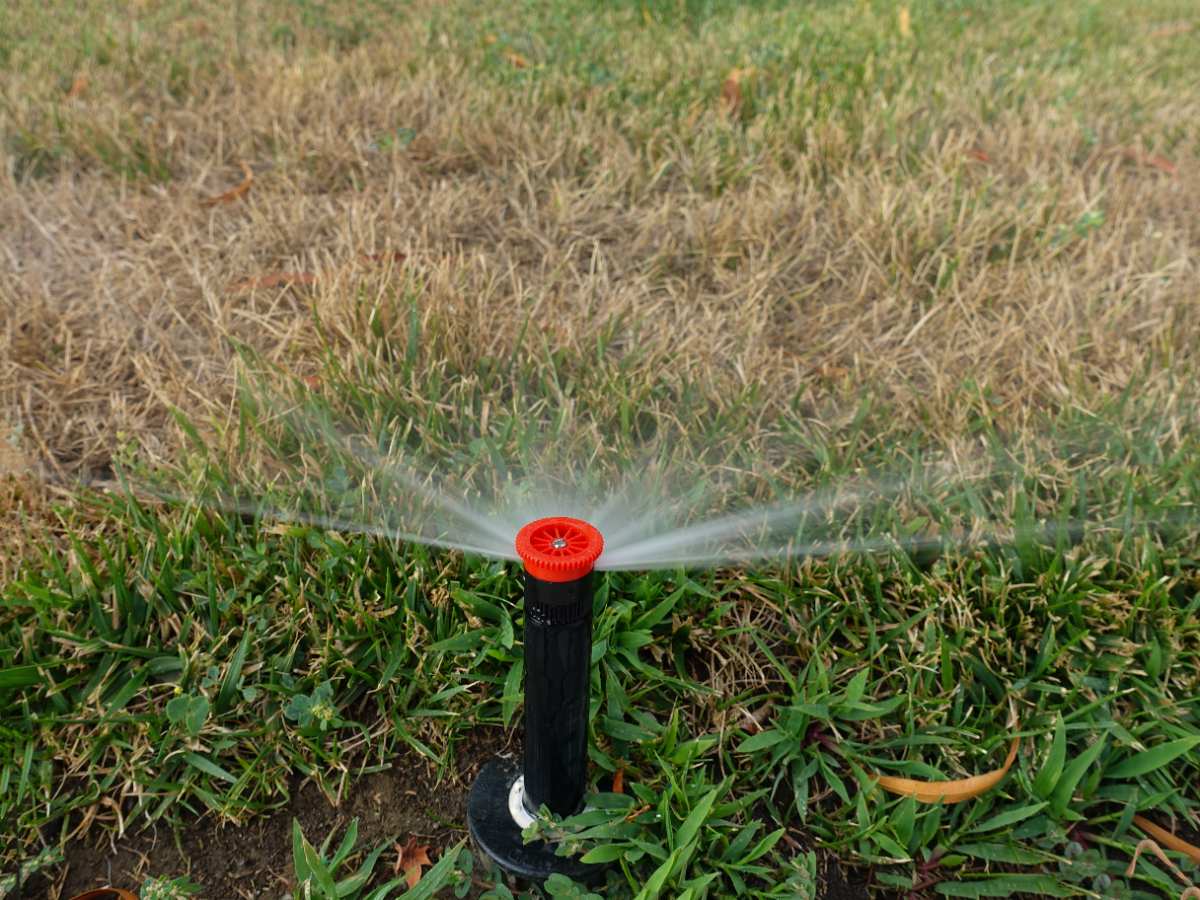
Bermuda grass has the best drought tolerance of the three common DFW turf types. Under severe drought stress, Bermuda goes into a protective dormancy — the grass turns brown but remains alive underground. This is not the same as being dead. When adequate moisture returns, Bermuda recovers from drought dormancy reliably in most cases. If your Bermuda lawn turns brown during a DFW drought period and water restrictions are in effect, do not panic. Provide the minimum irrigation allowed under the restriction stage to maintain root viability, and the lawn will green back up when conditions improve.
Zoysia grass handles drought reasonably well once established — better than St. Augustine, less resilient than Bermuda. Zoysia also goes into drought dormancy rather than immediately dying, but it takes longer to recover from extended drought dormancy than Bermuda and benefits from priority irrigation when water restrictions ease.
St. Augustine grass is the most drought-sensitive of the three. It does not handle drought dormancy as well as Bermuda and is more likely to experience permanent root damage and thin areas that require restoration after extended drought periods without adequate irrigation. During DFW water restriction periods, St. Augustine lawns should receive priority in the available irrigation allowance, and any thinning or dead areas should be assessed and addressed promptly as conditions allow.
Adjusting Lawn Maintenance Practices During DFW Drought
Water restrictions are not the only adjustment DFW homeowners need to make during drought periods. Several lawn maintenance practices should be modified during sustained heat and drought to reduce stress on already-challenged turf.
Raise the mowing height slightly. During the peak stress period of DFW summers — particularly July and August — raising the mowing height by half an inch above the normal target height for your grass type reduces heat stress significantly. Taller grass shades the soil surface, reduces evaporation from the soil, and keeps root zone temperatures lower. The visual difference is minimal. The turf health benefit is meaningful.
Avoid applying high-nitrogen fertilizer during drought. Nitrogen fertilization stimulates new top growth. New top growth during drought conditions without adequate moisture to support it increases stress on the plant rather than improving it. Pause nitrogen applications during extended drought periods and resume once water availability is restored and the grass is no longer under severe heat stress.
Do not attempt aggressive weed control or herbicide applications during drought. Stressed turf is more susceptible to herbicide damage. Post-emergent weed control applications on drought-stressed grass can cause significant turf injury. Defer aggressive weed control treatment to cooler, better-watered periods.
Defer aeration during severe drought. Core aeration during extreme heat and drought conditions stresses already-challenged turf. Spring and fall aeration windows are far more appropriate and effective than midsummer aeration during a DFW drought.
Recovery After Drought: What DFW Homeowners Should Do First
When drought conditions ease — whether through rainfall returning or water restrictions being lifted — the sequence of recovery actions for DFW lawns matters.
Begin by restoring deep, infrequent irrigation at the normal target volumes for your grass type. Let the soil return to healthy moisture levels before resuming any application treatments.
Assess turf condition after the first two to three weeks of restored irrigation. Areas of the lawn that are genuinely dead — not just dormant — will not green up even with adequate moisture. These areas will need overseeding or sod installation to restore, and that work should be planned for the fall window when conditions are most favorable for establishment.
Resume fertilization once the grass has resumed active growth following the drought period. A post-drought fertilization with appropriate nitrogen helps support the recovery and encourages the turf to fill in thin areas as quickly as possible before cooler fall temperatures arrive.
Lone Star Mow Co helps DFW homeowners manage their lawns intelligently through drought and water restriction periods. Our professional lawn care programs are built around the North Texas climate reality — including the regular summer drought cycles that test every lawn and landscape investment in this area.

Worried about your DFW lawn surviving this summer's drought and water restrictions?
Lone Star Mow Co provides professional lawn care for homeowners across Dallas-Fort Worth with the local knowledge to help your property through every North Texas season. Schedule your consultation today.

Ready to Transform Your property?

Find Us On


