

Hedge Trimming in DFW: Why Regular Shrub Care Makes or Breaks Your Landscape
Hedge Trimming in DFW: Why Regular Shrub Care Makes or Breaks Your Landscape
There is a specific kind of yard that homeowners across Keller, Southlake, Haslet, Roanoke, and Trophy Club can identify instantly — the one where the lawn is cut, the beds are mulched, and the shrubs and hedges are shaped cleanly into the landscape like they belong there. Then there is the yard next door where the hedges are overgrown, misshapen, and pushing against the siding of the house. The lawn might be mowed every week and the beds might look decent, but untrimmed shrubs can undermine the entire appearance of a property in a way that nothing else quite does.
Professional hedge trimming is one of those services that homeowners often overlook until the shrubs get out of control — and by then, corrective pruning requires significantly more time, effort, and sometimes even plant replacement to restore the landscape to where it should be. Regular, professional hedge trimming in the DFW area is not just about keeping things looking neat. It is about protecting the health of your plants, maintaining the structure of your landscape design, and ensuring that the property you have invested in continues to make the right first impression.
At Lone Star Mow Co, we provide professional hedge trimming and shrub care for homeowners across the DFW area — the kind of precise, detail-driven service that keeps your landscape looking intentional and maintained through every season.
Why Hedge Trimming Matters Beyond Appearance
Most homeowners think about hedge trimming as a purely cosmetic service. The reality is that regular hedge trimming and shrub pruning has direct, measurable effects on the health and longevity of your plants — effects that go well beyond how they look on any given day.
Hedge trimming promotes healthy, dense growth. When shrubs are trimmed correctly and consistently, the plant responds by putting out new, vigorous growth from the trimmed tips. Over time, this process produces denser, fuller, more compact plants that look far more polished than shrubs that have been left to grow unchecked. Conversely, shrubs that go too long without trimming develop a leggy, open structure with bare interior branches and overgrown outer edges that no amount of one-time pruning can fully correct.
Regular trimming removes dead and diseased wood. In the North Texas climate, shrubs are regularly exposed to heat stress, periodic drought, hard freezes, and fungal disease conditions. Dead branches, diseased stems, and weak or crossing growth are all natural byproducts of these stresses. Regular hedge trimming gives a professional crew the opportunity to identify and remove this problematic growth before it spreads to healthy parts of the plant. Dead wood left in place invites pest activity and disease that can progressively weaken the entire shrub.
Trimming allows light and air into the plant's interior. Shrubs that become too dense block sunlight and air circulation from reaching the interior branches. This creates conditions where moisture stays trapped inside the plant, fungal disease develops, and interior growth dies off — leaving shrubs that look green on the outside but are thin and dead inside. Proper hedge trimming thins the outer growth just enough to maintain the plant's shape while keeping the interior open and healthy.
Overgrown shrubs create pest and security problems. Hedges and shrubs that are allowed to grow too close to the foundation of a DFW home create harborage for pests including rodents, insects, and in Texas, the occasional snake. Dense, overgrown shrubs also obscure windows and entry points, creating security vulnerabilities that regular hedge trimming prevents. A professional hedge trimming service keeps shrubs at an appropriate distance from the home and maintains the kind of open, visible landscape that eliminates these concerns.
The Most Common Shrubs in DFW Yards and When to Trim Them
Not every shrub in a North Texas landscape requires the same trimming schedule or approach. Understanding the growth habits and bloom cycles of the most common shrubs found in DFW landscapes is the foundation of effective hedge trimming — and it is where many homeowners who attempt DIY pruning make costly mistakes.
LoropetalumLoropetalum is one of the most widely planted shrubs in DFW landscapes, and for good reason — it is heat-tolerant, drought-resistant once established, and produces striking deep purple-red foliage year-round with bursts of hot pink flowers in late winter and early spring. The timing of hedge trimming for Loropetalum matters significantly. Because it blooms in late winter to early spring on growth produced the previous season, heavy pruning should be done immediately after the spring bloom cycle ends — typically in April in the DFW area. Trimming too late in the summer removes the developing flower buds for the following season, resulting in a shrub with great foliage but no bloom the next spring. Light shaping can be done two to three times per year, but major cuts should be reserved for the post-bloom window.
Indian HawthornIndian Hawthorn is a DFW landscape staple known for its tidy, compact mounding habit, white to pink spring blooms, and excellent cold hardiness. Like Loropetalum, it blooms on prior season's growth, so the primary hedge trimming window is immediately after the spring bloom finishes — typically late April through May in North Texas. Trimming Indian Hawthorn before it blooms sacrifices the flower display entirely. After bloom trimming allows the plant to put out new growth through the summer that sets flower buds for the following spring.
Yaupon Holly and Burford HollyHolly varieties are among the most forgiving shrubs in DFW landscapes when it comes to hedge trimming. They are non-flowering for purposes of bloom timing, which means they can be trimmed at almost any point in the growing season without sacrificing ornamental value. The primary hedge trimming window for hollies in DFW is mid-February — a few weeks before the average last freeze date in North Texas — which stimulates strong new growth heading into spring. A second trimming in late summer or early fall keeps hollies clean and controlled through the rest of the year. Yaupon Hollies in particular respond very well to formal shearing and are commonly used as structured hedge lines throughout DFW neighborhoods.
BoxwoodBoxwood is a classic formal hedge shrub that is widely used in DFW landscapes for clean, defined borders and structured foundation plantings. The best timing for boxwood hedge trimming in North Texas is mid-February through early spring before new growth pushes out, with a follow-up trim in early summer after the first flush of new growth has hardened off. Boxwood is slow-growing compared to most other DFW landscape shrubs, which means it holds its shape for longer between hedge trimming visits — but it also means that when it is allowed to get out of shape, corrective pruning is a slow process.
NandinaNandina is one of the most common shrubs in DFW landscapes and one of the most frequently trimmed incorrectly. Unlike most shrubs, Nandina should not be sheared into a rounded ball shape — a practice so common it has been given a name among landscape professionals: the "lollipop" cut. Proper hedge trimming technique for Nandina involves selectively cutting the tallest canes back to ground level, which encourages the plant to produce new growth from the base and maintain its natural, graceful form. This type of selective pruning is best done in late winter or early spring in North Texas.
Crepe MyrtlesNo plant in DFW generates more heated conversation among homeowners and landscape professionals than the Crepe Myrtle — and specifically the widespread practice of severe annual topping, sometimes called "Crepe Murder." Cutting Crepe Myrtles back to ugly stumps every year is not proper hedge trimming. It weakens the plant structurally, produces excessive water sprout growth, reduces the natural flower display, and permanently disfigures what should be one of the most beautiful ornamental trees in a DFW landscape. Proper Crepe Myrtle pruning involves light selective trimming of crossing branches, spent seed pods, and low suckers — not annual decapitation. If a Crepe Myrtle has outgrown its space, the right solution is to replace it with a variety sized appropriately for the location, not to mutilate it every winter.
How Often Should DFW Homeowners Schedule Hedge Trimming?
The honest answer is that hedge trimming frequency depends on the specific shrubs in your landscape, their growth rates, and the level of appearance you want to maintain. That said, there are general guidelines that apply to most DFW residential landscapes:
Two to three times per year is the standard for most evergreen shrubs in North Texas — typically a primary trim in late winter or early spring, a maintenance trim in early summer, and a cleanup trim in early fall. This schedule keeps plants at the desired size, maintains clean shape throughout the growing season, and removes any summer heat or storm damage before the plants go into the cooler months.
Spring-blooming shrubs need post-bloom timing. For Loropetalum, Indian Hawthorn, Azalea, and other shrubs that bloom on prior season's growth, the primary hedge trimming visit should be scheduled after flowering ends — not before. This is the single most common timing mistake in DIY shrub pruning across DFW, and it costs homeowners an entire season of blooms when done wrong.
Fast-growing shrubs may need more frequent attention. Some DFW landscape shrubs — particularly certain Loropetalum varieties and Ligustrum — can put out significant growth during the spring and summer growing season. These may benefit from a light trimming pass every six to eight weeks during active growth to maintain a clean shape and prevent the plant from getting ahead of you.
Never trim during extreme heat or drought stress. One important DFW-specific consideration: avoid scheduling heavy hedge trimming during the peak of summer heat — particularly July and August — when shrubs are already under thermal and water stress. Trimming stimulates new growth, and that new growth is especially vulnerable to heat damage if it pushes out during the hottest stretch of a Texas summer. A light maintenance trim is fine during summer; save heavy pruning for the spring and fall windows.
The One-Third Rule: The Most Important Principle in Hedge Trimming
Whether you are doing light shaping maintenance or heavier corrective pruning, the most fundamental principle in hedge trimming is the one-third rule: never remove more than one-third of a shrub's total growth in a single trimming session.
Removing more than one-third of a shrub at once stresses the plant significantly. The root system, which was supporting the full volume of the plant, suddenly has to sustain a dramatically reduced amount of foliage — and simultaneously has to push resources into producing new replacement growth. In the North Texas climate, where summer heat is intense and plant stress is already a factor, over-pruning is a genuine risk to plant health and recovery.
For overgrown shrubs that have gotten significantly out of hand, the right approach is gradual correction over multiple trimming sessions across one to two growing seasons rather than attempting to restore the desired size in a single aggressive cut. This is another reason why consistent, regular hedge trimming is so much better — and more cost-effective — than neglecting shrubs until they require major corrective work.
Signs Your DFW Hedges and Shrubs Need Professional Trimming Right Now
If any of these describe the shrubs on your DFW property, it is time to schedule a professional hedge trimming service:
Shrubs are encroaching on the house, windows, or walkways. This is one of the most common issues we see on DFW properties — shrubs that have been left to grow until they are pressing against siding, covering windows, or hanging over walkways. Beyond the aesthetic problem, this creates moisture and pest issues against the home's exterior that can cause real damage over time.
The tops of shrubs are significantly taller than the sides. This is the classic profile of a shrub that has not been trimmed consistently. Lateral growth is restrained while vertical growth continues unchecked, resulting in a plant that is tall and narrow when it should be full and balanced.
Bare interior branches are visible through the outer foliage. When the interior of a shrub is bare and dead while the exterior looks green, it typically indicates that the outer growth has become so dense that light and air cannot penetrate to support interior branch health. Professional hedge trimming and selective thinning can restore balance.
Dead or brown branches are scattered through the plant. Visible dead wood in a hedge or shrub is never normal. It indicates disease, pest damage, freeze injury, or severe drought stress — all of which warrant immediate attention before the problem spreads further.
Your landscape just looks unkempt despite everything else being maintained. If your lawn is cut, your beds are mulched, and the overall property still looks like something is off — overgrown or poorly shaped hedges and shrubs are almost always the culprit. Professional hedge trimming is often the single change that takes a yard from adequate to genuinely impressive.
Professional Hedge Trimming vs. DIY: What DFW Homeowners Should Know
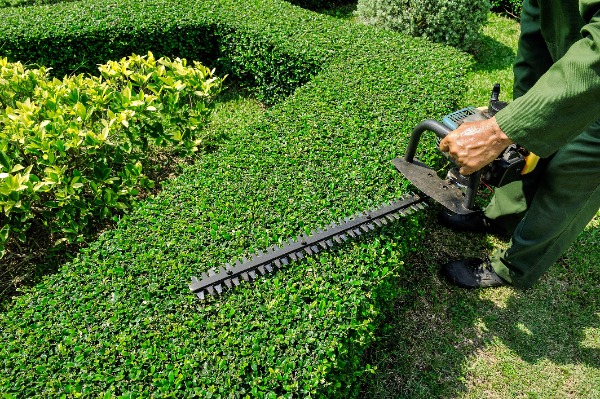
Hedge trimming looks deceptively simple. In practice, achieving clean, level, consistently shaped results across multiple shrubs of different species and growth habits — without over-cutting, without sacrificing bloom cycles, and without damaging plants — requires experience, the right equipment, and a clear understanding of how each specific plant in the landscape responds to pruning.
Professional hedge trimming tools — commercial-grade hedge trimmers with sharp, properly maintained blades — produce clean cuts that heal quickly and encourage healthy new growth. Dull blades, which are common on residential-grade tools and rentals, crush and shred plant tissue rather than cutting it cleanly. That tissue damage slows healing, invites disease entry, and leaves ragged-looking results that take longer to recover and look polished.
At Lone Star Mow Co, hedge trimming is part of our full-service approach to landscape care. Every shrub on your property is treated with the precision and attention it deserves — trimmed at the right time, to the right shape, with the right technique for its specific species. We serve homeowners throughout Keller, Southlake, Haslet, Saginaw, Roanoke, Trophy Club, Justin, Northlake, Rhome, Boyd, Azle, and Lake Worth with professional hedge trimming that keeps landscapes looking clean, structured, and genuinely well-maintained through every season.

Ready for professional hedge trimming and shrub care that actually makes a difference?
Lone Star Mow Co provides expert hedge trimming services for homeowners across the DFW area. Whether you need a one-time cleanup or ongoing shrub maintenance as part of a full-service lawn care plan, we are ready to make your landscape look its best.

Ready to Transform Your property?

Find Us On


