


Henbit and Spurge: The Broadleaf Weeds North Texas Homeowners Mismanage Most Often
Henbit and Spurge: The Broadleaf Weeds North Texas Homeowners Mismanage Most Often
North Texas homeowners who deal with broadleaf weed pressure in their lawns frequently encounter two species that are among the most widespread and most mismanaged: henbit, the purple-flowered winter annual that dominates cool-season weed pressure, and spurge, the low-growing summer annual that carpets bare soil and thin lawn areas from May through September. These two weeds are almost perfectly opposite in their seasonal timing, their growth habits, and their correct management approaches — and misunderstanding either one produces the reactive, ineffective treatment cycle that keeps them returning every season.
This blog covers both species with the specificity required to manage them correctly — what they are, when they are active, what allows them to establish, and what actually stops them.
Henbit: The Purple Winter Weed That Sets Seed Before Spring
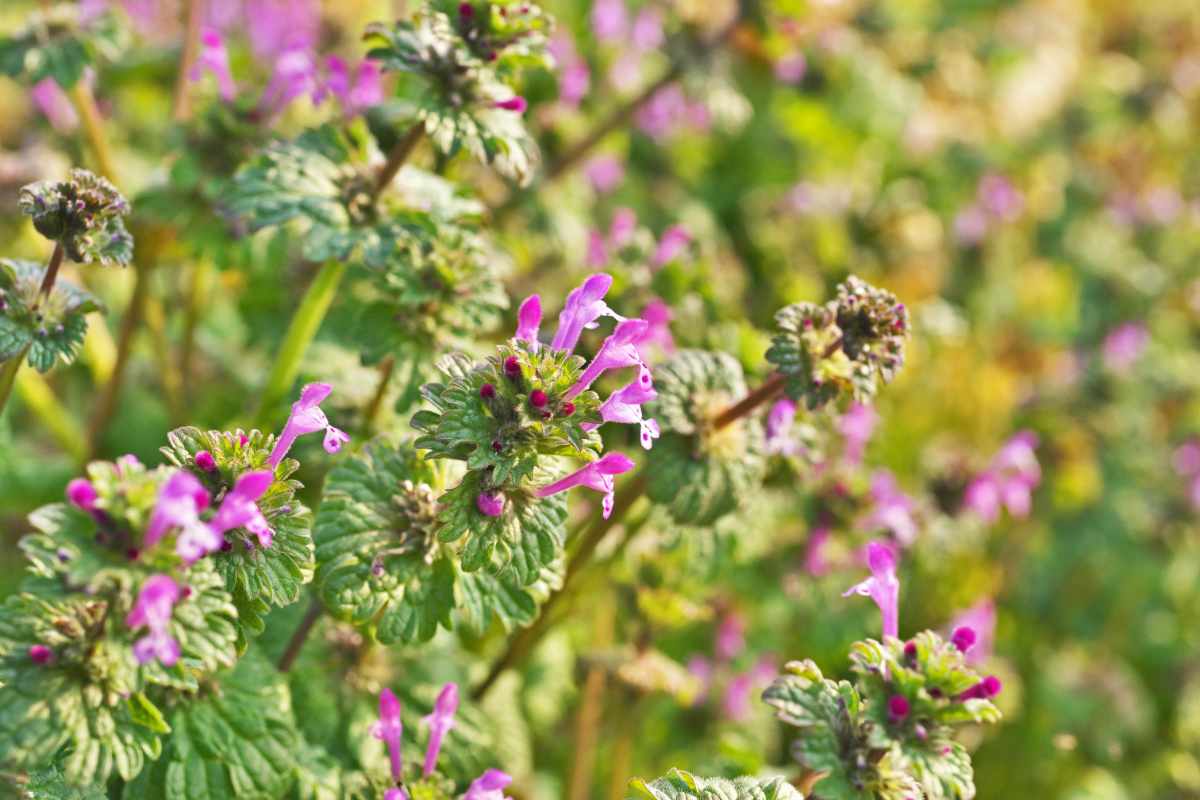
Henbit (Lamium amplexicaule) is a cool-season winter annual that is arguably the most visible broadleaf weed in North Texas during the fall through early spring period. Its distinctive square stems, rounded scalloped leaves, and small tubular purple flowers make it instantly recognizable in late winter — which is precisely when it is at its most mature and its most damaging from a seed-production standpoint.
The biological sequence that makes henbit a recurring problem: henbit seeds germinate in late September and October when soil temperatures drop below 70 degrees. The seedlings grow slowly through fall and early winter, establishing as small rosettes at the soil surface. In January and February, as mild North Texas winters provide adequate warmth, henbit resumes rapid growth. By late February and early March, it is producing the purple flowers and seed heads that most homeowners recognize — and by this point, it is producing viable seed for next fall's germination crop.
The critical management insight: By the time most homeowners notice henbit in their lawns — late February or early March, when it is flowering and visible — it is already setting or about to set seed. Treating it at this stage with post-emergent broadleaf herbicide kills the existing plants but does not prevent the seed already produced from establishing next fall's crop. The plants die, the lawn looks better, but the seed bank for the following season has already been stocked.
The most effective henbit management is fall pre-emergent — applied in late September to early October, before henbit seeds germinate — that prevents the current season's germination cycle entirely. A correctly timed fall pre-emergent that prevents henbit germination means there are no plants to die, no seed to set, and the fall weed bank is not replenished from this season's crop. Over multiple years of consistent fall pre-emergent application, henbit pressure declines progressively as the seed bank depletes.
Post-emergent timing for henbit that is already established: If fall pre-emergent was missed and henbit is present in winter, the most effective post-emergent timing is early — January or early February, when plants are actively growing but before flower and seed production has begun. Broadleaf herbicides containing 2,4-D, triclopyr, or dicamba applied in mid-February when the plants are flowering accomplish less preventive benefit than the same application in January when the plants are vegetative and the seeds are not yet set.
Products containing 2,4-D alone or in combination with MCPP and dicamba (commonly sold as "broadleaf weed killer" or "weed-and-feed" combination products) are effective against henbit when applied to actively growing plants in appropriate temperatures. Application in freezing conditions or dormancy has reduced efficacy. Target the late January to mid-February application window for the best results on already-established henbit.
Spurge: The Summer Annual That Fills Every Gap
Spurge — primarily spotted spurge (Euphorbia maculata) and prostrate spurge (Euphorbia supina) — is the opposite of henbit in nearly every way. Where henbit is tall and upright, spurge is low and flat. Where henbit is a winter annual, spurge is a summer annual. Where henbit produces obvious visible flowers, spurge produces inconspicuous seed heads that most homeowners do not notice until the plants are fully established and setting abundant seed.
Spurge germinates when soil temperatures at two inches reach 55 degrees — the same threshold that triggers crabgrass germination — in late February to mid-March. It germinates in the bare soil and thin turf areas where the soil surface receives direct sunlight, grows flat and radially outward from a central tap root, and produces a milky white latex sap when broken (the diagnostic field identification for spurge versus other low-growing broadleaf weeds).
A single spurge plant is not visually dramatic. The problem with spurge is its seed production and germination speed — a single plant produces thousands of seeds over a single growing season, and those seeds germinate within the same season if conditions are right, meaning one uncontrolled spurge plant can produce visible new plants in the same summer. By August or September on properties without pre-emergent coverage, the bare soil between landscape plants and in thin turf areas can be carpeted with spurge that germinated from the spring crop's seed production.
The correct management approach for spurge is identical to crabgrass prevention: spring pre-emergent application at the 55-degree soil temperature threshold prevents spurge germination in the turf and in landscape beds. Prodiamine and dithiopyr — the same products used for crabgrass — provide effective pre-emergent control of spurge. This is one of the reasons that correctly timed spring pre-emergent is described as the highest-value timing-sensitive service in the spring program — it simultaneously prevents crabgrass, spurge, and other summer annual weeds in both turf and landscape beds.
Post-emergent spurge control is more challenging than pre-emergent prevention, and the challenge increases with plant size and the number of established plants. Young spurge — two to four leaf stage, still a small rosette — is controlled effectively by broadleaf herbicides containing 2,4-D, triclopyr, or a combination product labeled for summer broadleaf weeds in warm-season turf. Mature spurge plants with established tap roots are harder to kill and may require multiple applications.
The speed of re-establishment from seed is the key challenge with post-emergent-only spurge management. Killing the existing plants in July does not remove the seeds in the soil from earlier-in-season plants that already set seed before treatment. New plants emerge from those seeds within two to four weeks of the treated plants dying. The reactive cycle of noticing spurge, treating it, watching new plants appear, treating again — is the pattern of a management approach that is fighting the symptom rather than the cause.
The prevention-first approach — spring pre-emergent that prevents the first generation from establishing — breaks this cycle by eliminating the in-season seed production that perpetuates the summer-long pressure.
How Lone Star Mow Co Addresses Both Weeds
Lone Star Mow Co's seasonal service programs incorporate the timing-specific pre-emergent applications that address both henbit and spurge at the preventive level:
Fall pre-emergent — correctly timed to late September or early October soil temperature thresholds — provides the henbit prevention barrier that reduces winter ground-level weed pressure and limits the seed production that drives next season's pressure.
Spring pre-emergent — correctly timed to the 55-degree soil temperature window in late February to mid-March — simultaneously addresses spurge, crabgrass, and other summer annual weeds before the germination season begins.
For clients where either weed is already established when the service relationship begins, post-emergent treatment of the existing population combined with the preventive program going forward produces the season-by-season improvement that the reactive-only management approach never achieves.

Henbit in winter and spurge in summer making your North Texas lawn look unmanaged all year?
Lone Star Mow Co applies the correctly timed preventive program that reduces both species season by season. Serving Keller, Southlake, Haslet, Saginaw, Roanoke, and Trophy Club. Schedule your free consultation today.

Ready to Transform Your property?

Find Us On


