


How Landscape Design Decisions Made Today Affect Maintenance Costs for the Next Decade
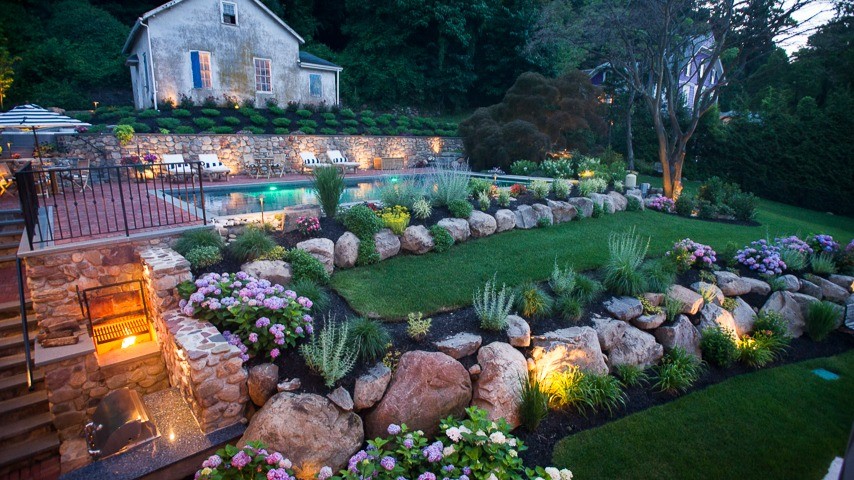
How Landscape Design Decisions Made Today Affect Maintenance Costs for the Next Decade
Every landscape decision has a maintenance consequence. The plant selected for a foundation bed determines whether that bed requires two hedge trimming visits per year or six. The tree installed in the southwest corner of the property determines whether summer shade reduces cooling costs and heat stress on adjacent plants, or whether its placement creates root-zone and structural conflicts that require attention in year eight. The bed design that includes clear, defined edges with appropriate edging material determines whether professional maintenance maintains those edges efficiently on every visit, or whether corrective restoration work is required every two to three years because the design did not accommodate how the lawn grass would behave adjacent to it.
These consequences are often invisible at installation time — when every plant looks appropriate in scale and every design decision looks reasonable — and become apparent only when the landscape matures and the cumulative effect of the original decisions plays out. By that point, the decisions have been made. Correcting them is more expensive than making them correctly the first time would have been.
This blog covers the specific landscape design decisions that most significantly affect ongoing maintenance costs in North Texas residential properties — framed not as design criticism but as practical guidance for homeowners and landscape professionals making decisions about new installations or significant landscape renovations.
Plant Selection and Mature Size: The Most Consequential Design Decision
The single landscape design decision with the most significant long-term maintenance cost implication is mature size selection for shrubs in foundation beds.
A large-maturing Loropetalum variety that reaches ten to twelve feet, planted in a thirty-inch-wide foundation bed with windows two feet above the planting surface, is not a design problem at installation — it looks appropriate and proportional. It becomes a design problem three to five years later when it begins pressing against the windows, extending onto the building facade, and requiring three to four corrective trimming visits per year to contain at an appropriate size.
Each corrective trimming visit required to maintain an oversized plant in an undersized space represents ongoing maintenance cost that persists for as long as that plant is in place. Over ten years, a single incorrectly sized plant that requires four trimming visits per year instead of two generates double the trimming maintenance cost for that plant — and on a foundation bed with eight or ten such plants, that compound cost is significant.
The correct design decision is selecting the compact variety of Loropetalum — Purple Diamond at three to four feet, or a moderate variety at five to six feet — for the bed dimensions and window height available. The compact plant requires the same two-visits-per-year maintenance through its entire life. The oversized plant requires escalating containment management that never resolves because the plant's natural growth impulse is never satisfied by the available space.
This principle applies to every shrub selection in foundation beds: evaluate the mature dimensions against the available space, the window heights, the distance from structures, and the desired maintenance frequency. The few minutes of research required to confirm mature dimensions at selection time eliminates the decade of cost implications from an incorrect choice.
Grass Type Selection and Shade Patterns: The Turf Quality Driver
Grass type selection that does not account for the actual shade patterns on the property creates ongoing turf quality problems that no amount of maintenance investment can correct.
Bermuda grass in an area that receives four hours of direct afternoon sun rather than the six-plus hours Bermuda requires does not thin once and stop. It thins progressively as the shade increases with tree canopy development, requiring increasingly intensive turf restoration efforts — overseeding, sod installation in thin areas, additional fertilization — that address the symptoms without the ability to correct the underlying cause, which is the wrong grass in the wrong light condition.
Over a decade, the maintenance cost of managing Bermuda in inadequate sun — the restoration sod, the additional fertilization, the weed control in the thin areas that weeds exploit — consistently exceeds the cost of the correct initial grass selection, which might have been St. Augustine or a shade-tolerant Zoysia variety for the actual shade conditions of that area.
The correct design decision is to accurately assess sun exposure by location — specifically distinguishing the minimum six-hour direct sun requirement for Bermuda from the more flexible four-to-six-hour range where St. Augustine and Zoysia perform — and select the appropriate grass type for each zone of the property rather than installing one type uniformly across the full area.
Bed Width and Depth: The Maintenance Frequency Driver
The physical dimensions of landscape beds — specifically their width from the front edge to the back edge and their depth relative to the adjacent structure — determine how easily they can be maintained and how quickly problems develop within them.
Narrow beds — under eighteen to twenty-four inches of planting depth — constrain both plant selection and root development. Plants installed in narrow beds outgrow the available space quickly, creating the containment trimming problem described above. Root competition for limited soil volume stresses the plants. And narrow beds do not accommodate the mulch depth that provides the moisture retention, weed suppression, and temperature regulation benefits that make beds easier to maintain.
Wider beds — thirty-six inches or more — allow proper plant spacing relative to mature dimensions, accommodate mulch at the correct depth, provide adequate root volume for healthy establishment, and create the visual proportion that makes the bed look designed rather than incidental. They are also more efficient to maintain per visit because the appropriate plant sizes for the available space require less containment trimming and produce fewer encroachment problems into adjacent areas.
If the choice is between a wider bed with correctly scaled plants and a narrower bed that requires smaller plants or constant containment maintenance of larger ones, the wider bed consistently costs less to maintain over time despite using more of the available lawn area.
Ground Cover Selection and Its Long-Term Maintenance Implications
The choice between organic mulch and decorative rock as bed ground cover — and the choice of rock type if rock is selected — has maintenance implications that persist through the full life of the installation.
Organic mulch requires annual replenishment — the most consistent, predictable ongoing maintenance cost associated with ground cover selection. That cost is offset by the soil health benefits described in the mulch blog, but it is a known annual cost that factors into the total landscape maintenance budget.
Rock in appropriate applications — drainage channels, erosion-prone areas, low-plant-density decorative zones — has low ongoing maintenance cost relative to mulch once correctly installed. Rock in inappropriate applications — planted beds with moisture-sensitive plants that need the humidity regulation and soil enrichment that organic mulch provides — creates higher maintenance costs through plant replacement and supplemental fertilization than the mulch it replaced would have cost.
Landscape fabric under rock — a design choice that is common in DIY and discount landscape installations — creates the long-term maintenance problem described in the Bermuda encroachment blog: short-term weed control that degrades and eventually requires labor-intensive removal and reinstallation. The correct design decision is to avoid landscape fabric entirely and manage weed pressure through appropriate ground cover depth, pre-emergent applications, and regular professional maintenance.
How Lone Star Mow Co's Design Approach Addresses These Issues
Every Lone Star Mow Co landscape design and installation project is evaluated through the lens of long-term maintenance implications — not just appearance at installation. Plant selections include explicit assessment of mature dimensions relative to available space. Grass type recommendations are based on measured sun exposure rather than the previous owner's choices or the installer's convenience. Bed dimensions are designed to accommodate correct plant spacing and mulch depth. Ground cover recommendations are matched to the specific function of each bed area.
This approach serves clients in two ways: it produces landscape installations that look genuinely better after five years than they did at installation, because the plants are appropriately sized for their spaces and the beds have developed their full character as plants mature. And it produces lower maintenance costs over time, because the design decisions that create escalating maintenance burdens are avoided at the outset.
For homeowners who already have landscape installations with the design problems described above — oversized plants in undersized spaces, Bermuda in inadequate sun, narrow beds with contained plants — the path forward involves an honest assessment of which elements are worth the ongoing maintenance investment and which should be replaced with better-scaled, better-matched selections.

Planning a new landscape installation or considering changes to an existing one? Lone Star Mow Co designs with long-term maintenance costs in mind.
Serving Keller, Southlake, Haslet, Saginaw, Roanoke, and Trophy Club. Schedule your free consultation today.

Ready to Transform Your property?

Find Us On


