

How Trees and Shrubs Should Look After Professional Trimming — and What Over-Trimming Looks Like
How Trees and Shrubs Should Look After Professional Trimming — and What Over-Trimming Looks Like
Professional hedge and shrub trimming is one of those services where the quality is visible in the finished result — but evaluating it correctly requires knowing what the correct result should look like rather than just whether the plants appear smaller or neater than before.
This blog covers specifically what well-executed hedge and shrub trimming should produce, and what the visible signs of over-trimming or incorrect technique are — giving North Texas homeowners a concrete evaluation framework for the trimming component of their professional landscape service.
What Correctly Trimmed Foundation Plants Should Look Like
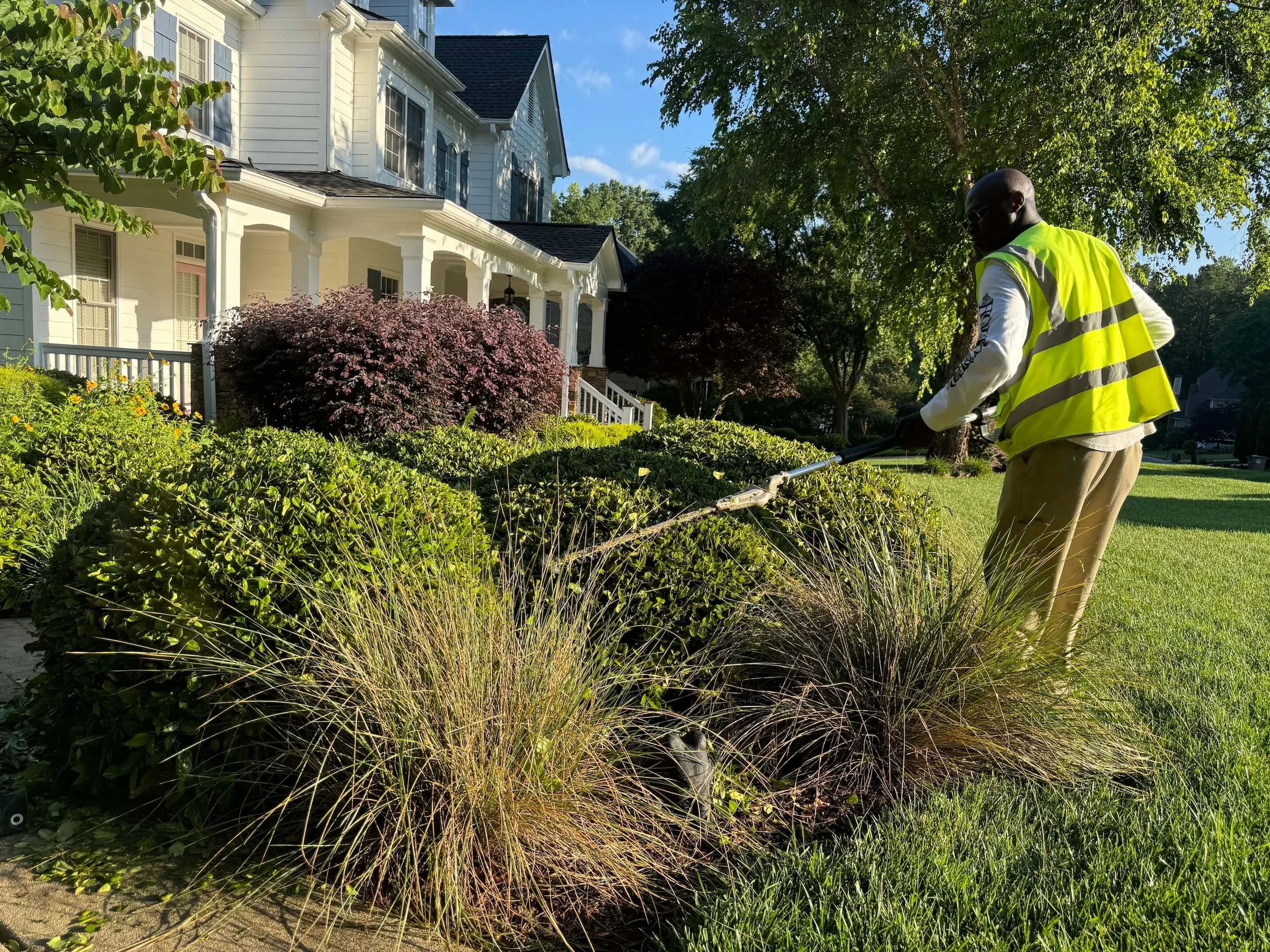
Proportional reduction to the correct size. Well-trimmed foundation plants are at the size that is appropriate for their position in the landscape — not as small as the trimmer can make them, and not as large as they would grow without maintenance. The correct trimmed size reflects the available space, the window height above, the foundation clearance below, and the visual relationship between the plant and the home's architecture.
A Loropetalum that should be maintained at four feet is trimmed to four feet, with clean, level-appearing surfaces that follow the plant's natural form. The trimmed plant does not have the perfectly geometric box shape that looks unnatural but the smooth, rounded-to-ovate form that reflects the plant's growth habit maintained at the correct scale.
Clean, consistent surface appearance. The trimmed surface of a hedge or foundation plant should appear consistent — same density of foliage across the surface, no sections that are raggedly cut with protruding branches and other sections that are smooth. Clean cut surfaces that have been made with sharp, correctly calibrated equipment present differently from torn, shredded cuts made with dull blades — the wound margins are cleaner and the foliage density at the surface is more consistent.
Species-appropriate form. Different species have different natural forms that correct trimming respects and enhances. Indian Hawthorn grows in a mounded, rounded form; correct trimming follows and defines that rounded outline rather than imposing a flat-top geometry that fights the plant's natural growth direction. Loropetalum has a cascading, multi-stemmed form; correct trimming reduces overall size while preserving the branching character that gives mature Loropetalum its distinctive appearance.
Maintained foliage density at the base. As discussed in the hedge trimming blog, the slight taper toward the top — wider at the base than the top — is the technique that allows light to reach the lower foliage through the season. Correctly trimmed foundation plants maintain consistent foliage density from base to top. The bottoms are not bare or sparse while the tops are dense.
What Over-Trimming Looks Like
More than one-third of the plant's mass removed in a single session. The same one-third rule that applies to grass mowing applies to shrubs — removing more than one-third of a plant's leaf mass in a single trimming event creates significant stress that produces reactive regrowth, depleted plant energy reserves, and in severe cases permanent damage to the plant's vascular system.
Over-trimmed plants show a specific response: explosive, multi-shoot regrowth from cut surfaces where the plant is attempting to replace the lost photosynthetic area as rapidly as possible. This regrowth is structural weaker than the original growth — the rapidly produced stems lack the woody structure of mature growth — and produces the cluttered, multi-shoot appearance at cut surfaces that characterizes plants that have been aggressively topped.
Visible cut surface damage. Over-aggressive trimming that cuts well into the woody interior of the plant — past the foliage zone into the bare structural branches — produces the bare, stick-exposed appearance that significantly detracts from the plant's visual quality. Bare branches visible through the foliage canopy are not a normal appearance for healthy, correctly trimmed foundation plants.
Disproportionate flat-top geometry. The perfectly flat-topped, square-edged foundation plant that looks like a green cube may appear "neat" in a superficial sense, but it communicates the wrong priority — geometric precision over species character — and produces the long-term foliage density problems from bottom shading that the flat-top geometry creates.
What Looks Normal in the Days After Trimming
Some browning of cut surfaces. The same browning that mowing produces at grass blade tips — from desiccation of the cut tissue before callus formation — occurs at shrub trimming cut points. A slight browning or tan discoloration of the outermost cut surfaces in the first week after trimming is normal and temporary. It resolves as the cut surfaces callus and new growth emerges. If the discoloration is extensive and the plant is showing general stress symptoms beyond the cut surface, a disease or root issue rather than normal cut response may be present.
Variable appearance before new growth emerges. Freshly trimmed plants have the slightly raw, unfinished appearance of cut-surface-exposed foliage before the new growth that fills in the trimmed surface emerges. This is most visible in the first two to three weeks after trimming and resolves as new growth emerges.
Variation between species in recovery speed. Indian Hawthorn pushes new growth relatively quickly after spring trimming. Yaupon Holly fills in very quickly. Loropetalum produces new growth quickly if trimmed during the active growing season. Plants trimmed close to dormancy recover more slowly as growth activity is reduced.

Want hedge and shrub trimming on your North Texas landscape that produces the correct result — proportional, species-appropriate, and healthy?
Lone Star Mow Co provides professional trimming with species-specific technique for homeowners across Keller, Southlake, Haslet, Saginaw, Roanoke, and Trophy Club. Schedule your free consultation today.

Ready to Transform Your property?

Find Us On


