

Lawn Leveling in DFW: How to Fix an Uneven, Bumpy Yard for Good
Lawn Leveling in DFW: How to Fix an Uneven, Bumpy Yard for Good
An uneven yard is one of those problems that starts subtle and gradually becomes impossible to ignore. Maybe your mower scalps the high spots on every pass, leaving burnt brown patches in an otherwise green lawn. Maybe there is a low spot in the backyard where water pools after every rain and refuses to drain for days. Maybe your lawn just looks lumpy and inconsistent no matter how well you maintain it, and no amount of mowing or watering seems to fix it.
If any of this sounds familiar, your DFW yard likely needs professional lawn leveling — and you are far from alone. Uneven lawns are one of the most common issues homeowners across Keller, Southlake, Haslet, Saginaw, Roanoke, Trophy Club, and the surrounding North Texas communities deal with, and the reasons behind them are directly tied to the specific conditions of DFW soil, weather, and construction.
Lawn leveling is the process of correcting uneven ground by filling low spots, smoothing bumps, and restoring proper drainage grade across your yard. Done correctly by a professional team that understands North Texas conditions, it transforms a frustrating, difficult-to-maintain yard into a smooth, functional, great-looking lawn that is actually a pleasure to spend time on.
What Causes Uneven Lawns in the DFW Area?
Before lawn leveling can be executed effectively, it helps to understand what is causing the unevenness in the first place. The cause affects the approach — and in DFW, several specific factors contribute to the lumpy, low-spotted yards that homeowners across North Texas regularly deal with.
Clay soil settlement in North Texas. The DFW area sits on clay-heavy soil that is notoriously prone to expansion and contraction with moisture changes. During wet seasons, clay soil absorbs water and expands. During the hot, dry DFW summer months, it loses moisture and contracts. This repeated expansion and contraction cycle causes the soil surface to shift gradually over time, creating uneven settling that produces bumps in some areas and low spots in others. This is a natural process in North Texas and one of the primary reasons lawn leveling is a recurring need on DFW properties — particularly in neighborhoods where homes are more than ten years old and the original grading has had time to shift.
Poor initial grading during construction. This is the most common cause of serious drainage problems on DFW residential properties. When a home is built, the soil around the foundation should be graded to slope gently away from the house — directing water runoff away from the foundation and out toward the street or drainage areas. When that initial grading is done incorrectly, water flows toward the house rather than away from it. Over time, this creates significant foundation risk as well as the kind of chronic low-spot pooling that no amount of lawn maintenance can address without proper lawn leveling to correct the grade.
Heavy foot traffic and pet activity. High-traffic areas of a DFW yard — the path kids take from the backdoor to the trampoline, the area where dogs patrol the fence line, the section of the yard that gets the most use during outdoor gatherings — develop depressions from repeated compaction. These compacted low areas become more pronounced over time and eventually create drainage problems, bare patches, and the kind of bumpy surface that damages mower blades and makes the lawn look perpetually unkempt.
Tree roots and stump removal. Mature trees in DFW yards can cause significant surface displacement as root systems grow and push upward through the soil. When trees are removed, the decomposition of the remaining root system creates voids underground that eventually collapse into surface depressions. Either scenario produces the kind of pronounced, localized unevenness that requires targeted lawn leveling to address properly.
Drought-driven soil shrinkage. During extended drought periods — which DFW regularly experiences during July, August, and September — the clay-heavy North Texas soil can shrink and crack significantly. When rainfall or irrigation eventually returns, the soil expands but does not always return to its original profile uniformly. This cycle gradually introduces unevenness that accumulates over multiple seasons.
Why Uneven Lawns Are More Than Just an Eyesore
DFW homeowners sometimes ask whether lawn leveling is really necessary if the unevenness is not severe. The honest answer is that an uneven yard creates real, compounding problems that go well beyond appearance — and the longer they go unaddressed, the worse and more expensive they become.
Standing water damages your lawn and creates pest problems. Low spots that collect water after rain or irrigation are consistently among the most difficult lawn problems to solve through surface-level care. Standing water suffocates grass roots by eliminating the oxygen they need from the soil. It creates ideal conditions for fungal disease — brown patch and other fungal problems are endemic in DFW and are dramatically worsened by chronic moisture pooling. Standing water also creates breeding habitat for mosquitoes, which is a genuine quality-of-life issue on any DFW property. Lawn leveling that corrects the underlying drainage grade eliminates these problems at their source.
Mower scalping creates bare patches that invite weeds. When a lawn mower rolls over high spots in an uneven yard, the blade comes into contact with the soil surface and scalps the grass down to bare dirt. These scalped patches die quickly in the DFW heat, and bare soil in a North Texas lawn fills in with weeds rather than grass unless actively reseeded or sodded. Lawn leveling removes the high spots that cause scalping and creates a consistent cutting surface that produces even, healthy results on every mow pass.
Uneven grading threatens your foundation. In DFW, where clay soil and foundation movement are constant concerns for homeowners, improper grading that directs water toward the home rather than away from it is a serious structural risk. Foundation repair in North Texas is expensive — averaging in the thousands of dollars for significant issues. Lawn leveling that corrects drainage grade is a preventative investment that protects one of the most valuable and most expensive structural components of your home.
An uneven yard is a safety hazard. Depressions, unexpected dips, and soft spots create genuine trip-and-fall risk for family members, guests, and especially children and elderly visitors. This is particularly true in the backyard where people move quickly during outdoor activities without looking carefully at the ground surface.
How Professional Lawn Leveling Works in DFW
Effective lawn leveling is not simply dumping soil into low spots and spreading it around. When done without proper assessment and technique, DIY lawn leveling attempts commonly result in suffocated grass, compaction problems, poor drainage that is actually worse than before, and wasted effort. Professional lawn leveling in the DFW area follows a structured process that addresses the root causes of unevenness and produces lasting results.
Step 1: Property AssessmentA professional lawn leveling project starts with a thorough evaluation of the yard — identifying the location and severity of low spots, high spots, and drainage problem areas. This assessment also identifies the cause of the unevenness, which determines the right correction approach. A low spot caused by clay soil settlement requires a different solution than one caused by a decomposing tree root void or improper initial grading. Understanding the cause is what separates a professional lawn leveling outcome from a DIY fill-and-hope approach.
Step 2: Soil Mix SelectionThe material used in a DFW lawn leveling project matters significantly. The standard topdressing mix for lawn leveling in North Texas is a blend of sand and compost — typically a ratio weighted toward sand to improve drainage in the clay-heavy DFW soil profile, with enough compost to provide nutrients and support grass establishment in the leveled areas. Straight topsoil is not the right choice for lawn leveling in DFW. Standard topsoil is often nutrient-poor, may introduce weed seeds, and does not integrate well with the existing soil profile — creating a layering effect that actually impairs drainage rather than improving it.
Step 3: Mowing and PreparationBefore the leveling material is applied, the lawn is mowed as short as the grass type safely allows to reveal the full extent of the uneven terrain and make it easier to work the leveling material into the existing turf. This preparation step also ensures that the leveling material makes direct contact with the soil surface rather than sitting on top of a thick grass canopy.
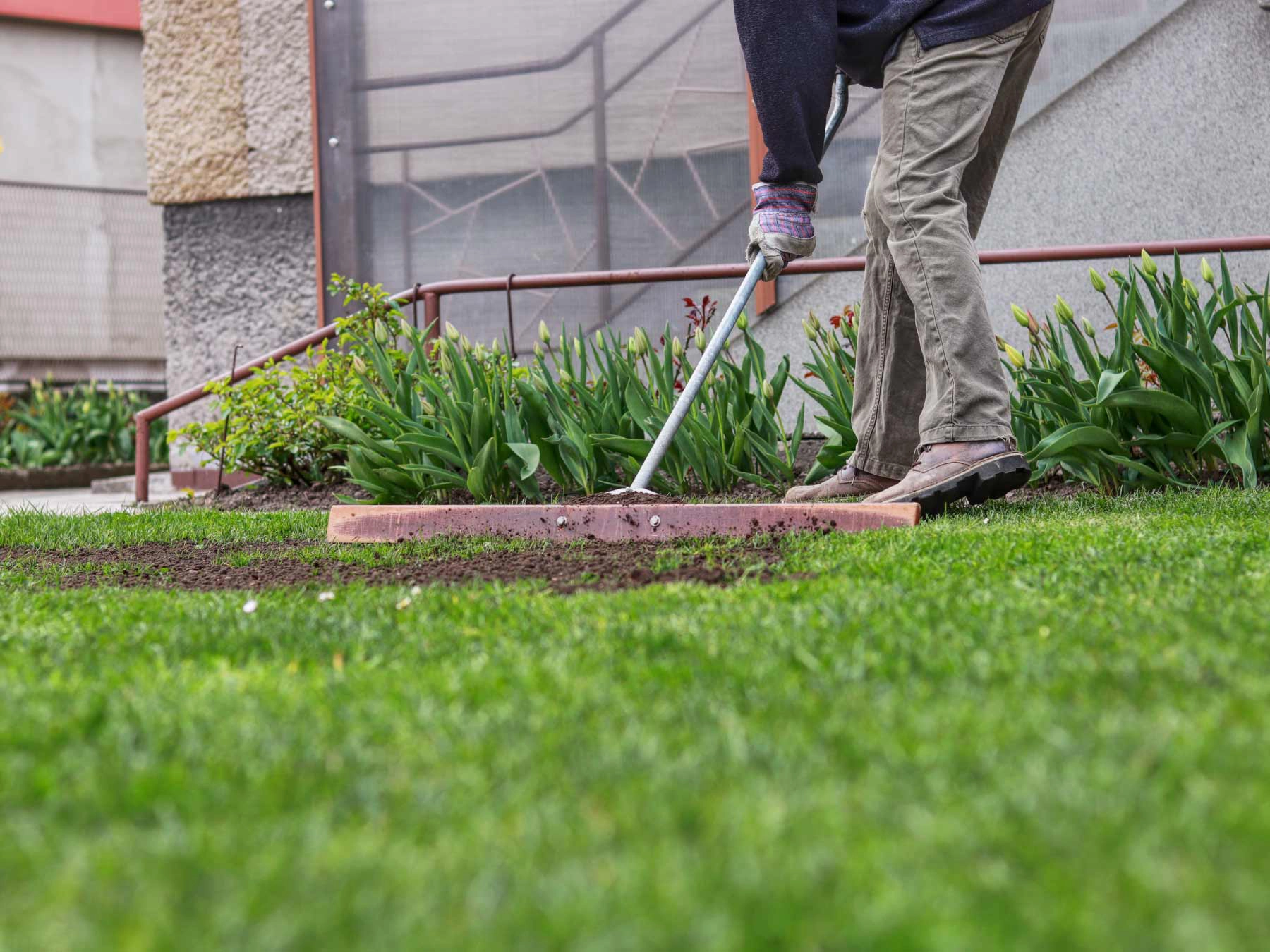
Step 4: Filling Low Spots and LevelingThe leveling material is distributed across low areas, low spots, and soft depressions. The critical rule in professional lawn leveling is depth management per application: no more than a half inch of new material should be applied over existing grass in a single pass. Applying too much material at once smothers the grass beneath it, killing the turf rather than raising the grade through it. For yards with significant low spots — more than an inch or two below the surrounding grade — multiple lawn leveling applications across several growing season visits are the correct approach. Patience and incremental progress produce better, longer-lasting results than trying to correct everything in a single aggressive application.
Step 5: Raking, Rolling, and WateringAfter the leveling material is distributed, a leveling rake or drag mat is used to spread it evenly and work it into the existing turf profile. A lawn roller helps compact the new material gently into the surface for good soil-to-soil contact. The area is then watered to help the new material settle into place and integrate with the existing soil profile.
When Is the Best Time for Lawn Leveling in DFW?
Timing matters for lawn leveling in North Texas, and the right windows align with active grass growth periods when the turf can recover quickly from the disruption of having new material worked into its surface.
Spring is the primary window: March through May. Lawn leveling in the DFW area is most effective in the spring, when warm-season grasses like Bermuda, St. Augustine, and Zoysia are actively growing and have the vigor to push up through new leveling material and fill in quickly. Spring lawn leveling also sets the yard up for the entire growing season — correcting drainage before summer rains, eliminating the scalping problem before the weekly mowing season, and giving low spots the best chance to establish and stabilize before DFW summer heat arrives.
Early fall is the second-best window: September and October. Fall lawn leveling gives warm-season grasses the opportunity to recover before they slow for winter, and it takes advantage of the typically more moderate temperatures that make soil work and grass recovery easier than the peak of summer. Fall leveling also sets the lawn up for a strong spring green-up by improving drainage and surface evenness heading into the cooler months.
Avoid lawn leveling during peak summer heat. Working new soil material into a lawn that is already under severe heat and drought stress in July or August sets both the grass and the leveling project up for poor results. The existing turf is too stressed to push through new material effectively, and evaporation from the freshly applied mix makes proper moisture management difficult during establishment.
5 Signs Your DFW Yard Needs Lawn Leveling
If you are unsure whether your yard needs professional lawn leveling, these are the most reliable indicators that it is time to address the problem:
1. Water pools in specific areas after rain or irrigation. Chronic puddles that take more than a few hours to drain are a clear sign of grading problems that only lawn leveling can correct properly.
2. Your mower consistently scalps the same high spots. Repeating scalp marks on every mow pass are not a mowing technique problem — they are a lawn leveling problem. Those high spots need to come down or the surrounding grade needs to come up to create a consistent cutting surface.
3. Your lawn feels spongy or uneven underfoot. Walking across a yard and feeling soft, irregular terrain beneath your feet is a sign of uneven soil settlement that has progressed to the point where the surface profile has changed significantly from its original grade.
4. Bare patches keep appearing in the same locations. Recurring bare spots that do not respond to reseeding or sod patching are often caused by chronic moisture problems from poor drainage in those specific areas. Lawn leveling that addresses the underlying drainage issue is what allows those spots to finally establish and hold.
5. You can visibly see low spots or depressions from across the yard. If the unevenness in your DFW yard is visible from a standing position — dips, depressions, or rolling terrain that clearly should not be there — professional lawn leveling is the right solution.
Lawn Leveling as Part of a Complete DFW Yard Restoration
For many DFW homeowners, lawn leveling is the starting point of a broader yard improvement project that might also include sod installation in areas where grass has been killed by chronic drainage problems, aeration and topdressing to improve the overall soil health of the lawn after leveling, and ongoing professional lawn maintenance to keep the newly leveled surface looking its best through every growing season.
At Lone Star Mow Co, we provide professional lawn leveling for homeowners across Keller, Southlake, Haslet, Saginaw, Roanoke, Trophy Club, Justin, Northlake, Rhome, Boyd, Azle, and Lake Worth. Whether you are dealing with minor low spots that need a single application pass, significant drainage problems that require multiple-visit correction, or a yard that has never had its grade addressed since the home was built — we bring the expertise, equipment, and local North Texas knowledge to get it done right.
A smooth, level lawn is not a luxury. In the DFW area, it is the foundation that everything else — the maintenance, the sod, the landscaping — is built on. Lone Star Mow Co is the team that builds it right from the ground up.

Does your DFW yard have low spots, drainage problems, or a surface that just refuses to look right?
Lone Star Mow Co provides professional lawn leveling services for homeowners across the Dallas-Fort Worth area. Let us assess your yard, identify the cause, and build a plan that fixes the problem for good.

Ready to Transform Your property?

Find Us On


