

Lawn Leveling in North Texas: The Before, During, and After of a Professional Project
Lawn Leveling in North Texas: The Before, During, and After of a Professional Project
Lawn leveling is one of those services that most North Texas homeowners understand conceptually — fill in the low spots, smooth out the bumps, improve drainage — but that few have a clear picture of what the actual professional process involves from initial assessment to completed result. This blog walks through a typical professional lawn leveling project in North Texas from start to finish, describing what each phase involves and what the homeowner should expect at each stage.
Before: The Assessment That Determines the Approach
Not all lawn leveling projects are the same. The assessment that precedes every Lone Star Mow Co leveling project determines the specific scope, material requirements, and approach that the property's specific conditions warrant.
Grade assessment. Walking the full lawn area to identify the specific locations where leveling is needed — low spots that collect water, high spots that create scalping problems during mowing, surface irregularities from soil settling, surface root expressions from mature trees. The assessment maps these locations and documents their relative severity (shallow depression requiring a single topdressing pass versus a significant low spot requiring multiple applications and possibly drainage work).
Drainage evaluation. Low spots that are symptoms of a drainage problem — areas that collect water not because the grade is slightly low but because water from adjacent surfaces is directed there — need the drainage problem addressed rather than simply the grade corrected. Filling a low spot with topdressing material that will again become a low spot because the water that caused the original settling continues to be directed there produces temporary improvement and ongoing frustration. Identifying drainage-related settling versus general grade irregularity determines whether the leveling project requires only fill material and grading work or also drainage infrastructure modification.
Material calculation. The volume of sand-compost blend or quality fill material needed for the specific scope of leveling work is calculated from the assessment. Under-ordering requires a return trip for additional material. Over-ordering wastes product and budget. Accurate measurement of the depression areas and their depth determines the material order.
During: The Leveling Process
Lawn height preparation. Before leveling material is applied, the lawn is mowed slightly shorter than the standard maintenance height — not scalped, but short enough that the topdressing material can be worked into the turf surface rather than remaining elevated above it. This mowing preparation is typically done two to three days before the leveling application to allow the cut grass to begin recovering before the topdressing material is applied.
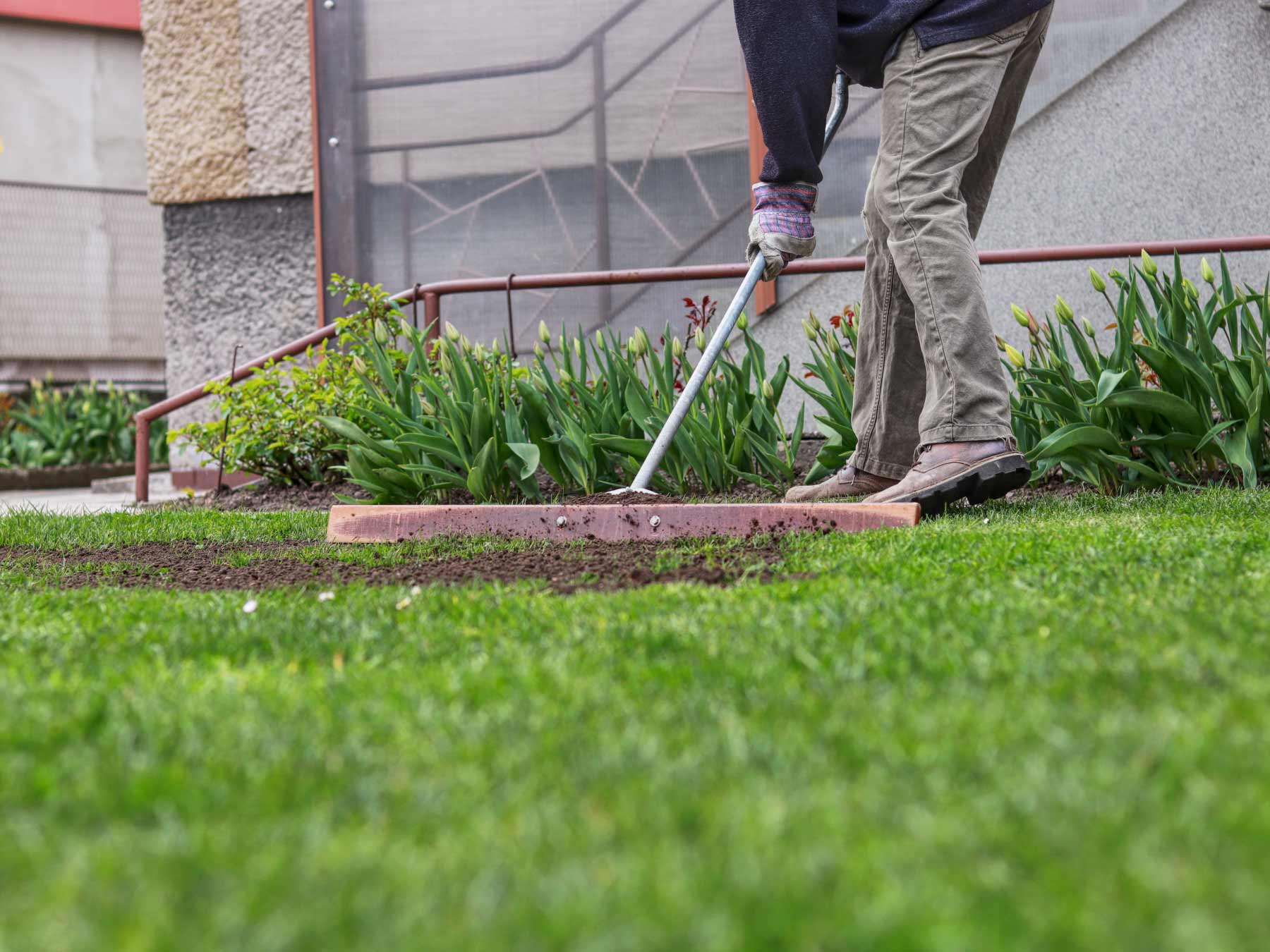
Material application. The sand-compost blend or fill material appropriate for the specific depth of correction is applied to the identified low spots and irregular areas. For shallow corrections (less than half an inch of fill needed), material is spread across the affected area and worked into the turf surface with a lawn leveling drag — a flat, flexible implement that distributes the material evenly across the turf without burying the grass blades.
For moderate corrections (half an inch to one inch of fill needed), the material is applied in layers rather than all at once — applying more than one inch of topdressing material in a single pass can bury the turf blades and prevent the grass from recovering through the material. Multiple applications spaced two to three weeks apart allow each application to be incorporated before the next is applied.
For significant corrections (more than one inch of fill needed), or for corrections in areas where the grass has already died and bare soil is present, the approach may include more aggressive filling followed by sod installation rather than topdressing over living turf.
Final grading and inspection. After material application, the leveled area is checked for consistent depth, proper drainage slope (the material is shaped to direct water flow away from structures and toward the correct drainage path), and correct finish grade. Any areas where the material application has been uneven are adjusted before the project is considered complete.
After: What to Expect in the Recovery Period
Lawn leveling does not produce an immediately finished appearance. The recovery period is a specific expectation management item that every Lone Star Mow Co leveling project includes in the client communication:
The first one to two weeks: The leveled areas look disrupted — the fresh topdressing material is visible on the turf surface, the grass in the treated areas may look slightly compressed or smothered in areas of heavier application. This is normal and expected. The grass is beginning to grow through the topdressing material.
Two to four weeks post-application: Active Bermuda or Zoysia begins growing through the topdressing material in the treated areas. The surface starts to green up in the leveled zones as the grass establishes contact with the fill material above the root zone. For areas that required aggressive filling and bare soil preparation, newly installed sod begins establishing root contact.
Four to eight weeks: The leveled areas are approaching the appearance of the surrounding maintained turf. The surface irregularities that prompted the leveling project are no longer visible — the grade is consistent, the drainage performance has improved, and the mowing equipment passes over the area without the scalping that grade irregularities previously produced.
The complete result — six to twelve weeks: By the end of the growing season following a spring leveling project, the treated areas are fully integrated with the surrounding turf. The leveling work is no longer visible as a distinct intervention — the property surface is consistent and the drainage, mowing, and appearance improvements are simply part of how the property functions and looks.
How Lone Star Mow Co Manages Client Expectations Through the Process
Clear, honest communication about the before, during, and after timeline is part of every Lone Star Mow Co leveling project. We explain the temporary appearance during the recovery period before the project begins — so homeowners are not alarmed by the disrupted appearance in the first two weeks and understand that the temporary regression is the expected path to the finished result.
We also provide specific maintenance guidance for the leveled areas during the recovery period: watering frequency that maintains adequate soil moisture without waterlogging the fresh fill material, mowing height adjustments that protect the recovering turf in treated areas, and the traffic restriction that protects the freshly applied material from premature compaction.

Ready to address the drainage, mowing, and appearance problems that an uneven North Texas lawn creates?
Lone Star Mow Co provides professional lawn leveling with honest expectation management and complete recovery support. Serving Keller, Southlake, Haslet, Saginaw, Roanoke, and Trophy Club. Schedule your free consultation today.

Ready to Transform Your property?

Find Us On


