

Sod Installation in DFW: The Complete Homeowner's Guide
Sod Installation in DFW: The Complete Homeowner's Guide
There is no faster way to transform a patchy, bare, or damaged lawn than professional sod installation. While seeding can take months to produce results — if it produces results at all in the North Texas heat — sod gives you a full, green, established lawn in a matter of days. That is why sod installation has become one of the most requested services for DFW homeowners in Keller, Southlake, Haslet, Saginaw, Roanoke, Justin, and the surrounding communities.
But sod installation is not as simple as rolling out grass and watering it. When it is done wrong — with the wrong grass type, poor soil preparation, or improper aftercare — even the freshest sod will fail. When it is done right, it is one of the best investments a homeowner can make in their property.
This guide covers everything DFW homeowners need to know about sod installation: which grass type is right for your yard, when to install, what the process looks like, how to care for new sod, and what separates a professional sod installation from one that ends in frustration.
Why DFW Homeowners Choose Sod Installation Over Seeding
The most common question homeowners ask before a sod installation project is simple: why not just seed? It is a fair question, and the answer comes down to three things — time, reliability, and the reality of the North Texas climate.
Seeding takes months. Sod takes days. A properly installed sod lawn establishes root contact with the soil within two to three weeks. A seeded lawn in DFW can take two to four months before it is ready for regular foot traffic — and that is under ideal conditions. For most North Texas homeowners working with clay-heavy soil, unpredictable rainfall, and summer heat that regularly exceeds 100 degrees, seeding is an uphill battle that often ends in disappointment.
Sod provides immediate erosion control. The DFW area gets its share of heavy spring storms. Bare or seeded soil washes away during heavy rain events, undermining landscaping and causing drainage problems across the yard. Sod installation holds soil in place from the first day it goes down, protecting your investment and your yard's grading immediately.
Sod gives you instant curb appeal. Whether you are preparing for a home sale, satisfying an HOA requirement, or simply tired of looking at a yard that does not reflect the effort you put into your home, sod installation transforms the property immediately. There is no waiting for seed to germinate, no bare patches while it fills in, and no guessing whether it is going to work.
Which Type of Sod Is Right for Your DFW Yard?
Choosing the right grass type is the most important decision in any sod installation project. The wrong grass in the wrong conditions will struggle no matter how well the rest of the installation is executed. In the DFW area, three warm-season grasses dominate residential sod installation: Bermuda, St. Augustine, and Zoysia. Each one has a distinct set of strengths and limitations.
Bermuda GrassBermuda is the most popular sod choice for full-sun yards in the DFW area, and for good reason. It is tough, drought-tolerant once established, and handles heat and heavy foot traffic better than almost any other warm-season grass. Bermuda establishes deep root systems and spreads aggressively through both above-ground and below-ground runners, which makes it excellent for quickly filling in a yard after sod installation. It is the go-to choice for homeowners with kids, pets, or yards that get heavy use. The one limitation to keep in mind: Bermuda does not tolerate shade. If your yard has significant tree coverage or gets less than six hours of direct sunlight per day, Bermuda is not the right choice.
St. Augustine GrassSt. Augustine is the preferred sod option for yards that have moderate shade, and it is widely used throughout the DFW area in neighborhoods with mature tree coverage. It has a broader blade than Bermuda, produces a lush, carpet-like appearance, and handles heat and humidity well. St. Augustine also establishes relatively quickly after sod installation and spreads through surface runners that fill in the lawn over time. The key consideration for DFW homeowners: St. Augustine requires more water than Bermuda and is more susceptible to chinch bugs and brown patch fungal disease during hot, humid Texas summers. It also does not hold up as well under heavy foot traffic from dogs and active kids.
Zoysia GrassZoysia has grown significantly in popularity for DFW sod installation in recent years, and for good reason. It offers a level of versatility that Bermuda and St. Augustine cannot match — it handles both sun and partial shade, it is more drought-tolerant than St. Augustine, it requires less frequent mowing once established, and it produces a dense, fine-textured lawn with excellent color that stays green through a longer portion of the year. Zoysia is the right choice for homeowners who want a low-maintenance lawn that looks exceptional without constant attention. The main drawback is that Zoysia establishes more slowly than Bermuda, and it is typically the most expensive of the three options for sod installation.
When Is the Best Time for Sod Installation in DFW?
One of the most common questions DFW homeowners ask about sod installation is timing. The short answer is that sod can be installed year-round in North Texas with proper irrigation — but timing still matters for how quickly and successfully the sod establishes.
Late spring through early summer is the ideal window. Sod installation during April through June gives warm-season grasses like Bermuda, St. Augustine, and Zoysia the best possible conditions to root quickly. Soil temperatures are warm, active growth is beginning, and the sod can establish itself before the intense heat of a DFW July and August arrives.
Fall is the second-best window. Sod installation in September and early October gives the grass enough time to develop strong roots before the cooler months slow growth. Fall sod installation works well for all three grass types and is actually preferred by some DFW professionals because the heat is less intense and establishment is less stressful on the turf.
Summer sod installation requires extra attention. Installing sod during the peak of a DFW summer is possible but demands a strict watering schedule during the establishment period. Heat stress is the number one threat to new sod, and proper irrigation is non-negotiable when temperatures are regularly climbing past 100 degrees.
Winter sod installation is the most challenging. While not impossible, installing sod during December through February in DFW is the most difficult timing. Cool soil temperatures slow root establishment significantly, and the risk of a hard freeze damaging newly installed sod — especially St. Augustine — is a real concern.
What the Professional Sod Installation Process Looks Like
Professional sod installation is a multi-step process, and every step matters. Skipping or shortcutting any part of the process is the most common reason sod fails after installation.
Step 1: Site AssessmentBefore any sod installation begins, a professional crew evaluates the property for sunlight levels, shade, soil condition, drainage, and existing vegetation. This assessment is what determines which grass type is right for the yard and what preparation the site needs before sod goes down.
Step 2: Removing Existing VegetationOld grass, weeds, and ground cover need to be killed and removed before sod installation begins. Leaving existing vegetation in place and laying new sod on top is one of the most common mistakes DIY sod projects make. Old grass growing up through new sod undermines the entire installation and creates a patchy, uneven result.
Step 3: Soil Preparation and GradingThis is the most critical step in any successful sod installation. The soil is tilled, amended if needed, and graded smooth to ensure proper drainage and even growth. Sod laid over uneven, compacted, or poorly drained soil will develop root problems, low spots, and dead patches. In DFW, where clay soil is common, proper soil preparation is especially important to give new sod the drainage it needs to establish.
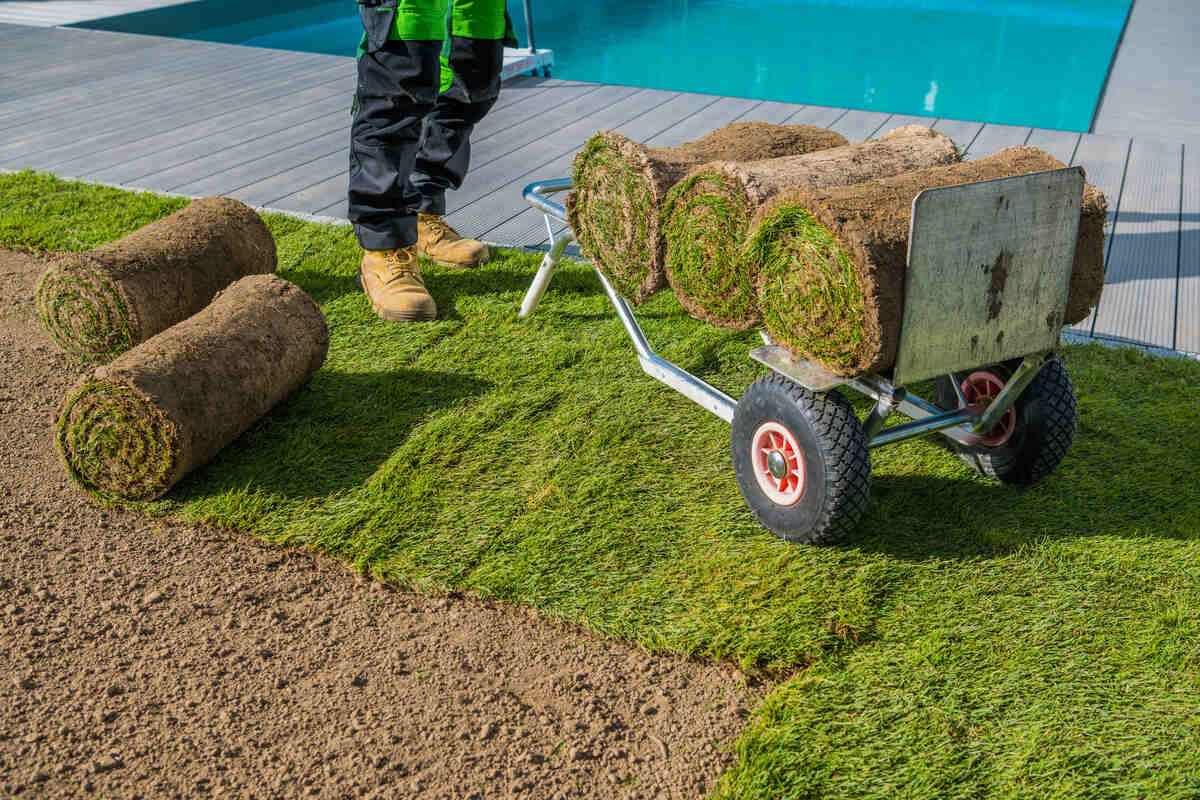
Step 4: Laying the SodSod is laid in staggered rows — similar to a brick pattern — to minimize visible seams and ensure complete coverage. Each piece is pressed firmly against the soil for direct root contact. Gaps between pieces invite weed growth and create uneven spots that are difficult to correct after the fact. After laying, a sod roller is used to press the grass firmly into the prepared soil to eliminate air pockets and ensure uniform root contact across the entire installation.
Step 5: Initial WateringNew sod in DFW needs to be watered immediately after installation. During the first week, the goal is to keep the soil consistently moist — not soaking wet, not dry. A typical post-installation watering schedule for DFW looks like this: twice daily for the first seven days, once daily for the second week, transitioning to every other day by weeks three and four. After 30 days, established sod is shifted to a normal deep, infrequent watering schedule.
5 Sod Installation Tips Every DFW Homeowner Should Know
Whether you are hiring a professional or overseeing the process, these tips will protect your sod investment:
1. Do not skip soil preparation. The condition of your soil before sod installation determines how well the grass roots. Clay-heavy DFW soil often needs to be tilled and amended before sod goes down. A professional sod installation team handles this step properly — most DIY installs do not.
2. Match your grass to your yard's conditions. Shade levels, foot traffic, irrigation availability, and soil type all affect which grass performs best. Bermuda in a shaded yard, or St. Augustine in a high-traffic dog run — both are recipes for failure regardless of how well the sod installation itself is executed.
3. Water deeply, not constantly. New sod needs moisture to establish, but overwatering is as damaging as underwatering. Soggy sod drowns roots and creates conditions for fungal disease. Follow the post-installation watering schedule and watch the sod's color and firmness as indicators of whether it is getting enough moisture.
4. Stay off new sod for at least two to three weeks. New sod installation in DFW needs time to establish root contact with the soil before it can handle foot traffic. Walking, playing, or placing furniture on new sod too early loosens the turf and disrupts rooting, leading to uneven establishment and dead spots.
5. Wait before mowing. After sod installation, wait until the grass reaches three to four inches before mowing for the first time, and never remove more than one-third of the blade in a single cut. Mowing too early or too aggressively stresses the sod before it has fully established its root system.
Signs Your DFW Yard Is Ready for Sod Installation
Not every yard needs sod installation, but several situations make it the clear right choice:
Bare patches that won't recover. Areas of your yard where grass has died and refuses to regrow — whether from drought, disease, pest damage, or shade — are strong candidates for sod installation. Reseeding these areas in DFW rarely produces reliable results.
A new construction home. Builders in DFW communities like Keller, Haslet, and Roanoke typically leave homes with minimal or no lawn. Sod installation is the fastest and most reliable way to establish a proper lawn from scratch after move-in.
An uneven or drainage-compromised yard. If your yard has significant low spots, poor drainage, or erosion issues, a professional sod installation combined with grading and soil preparation is the most effective solution to restore a level, functional lawn.
You want results now. If you are selling your home, hosting an event, or simply at the point where you are done watching a patchy yard and ready to fix it properly — sod installation is the solution. There is no faster path from a struggling yard to a clean, green, established lawn.
Why Professional Sod Installation Matters in DFW
DFW homeowners who attempt DIY sod installation consistently run into the same problems: poor soil preparation, wrong grass selection, insufficient watering, and sod that never fully establishes. The cost of redoing a failed sod installation is always higher than the cost of doing it right the first time with a professional team.
At Lone Star Mow Co, our sod installation service covers every step of the process — site assessment, vegetation removal, soil preparation, grading, installation, and post-installation guidance so your new lawn has every advantage it needs to establish quickly and last for years. We work with Bermuda, St. Augustine, and Zoysia, and we help every homeowner in our DFW service area choose the right grass for their specific yard conditions.
From Southlake to Saginaw, Keller to Lake Worth, Trophy Club to Azle — if your yard needs a fresh start, Lone Star Mow Co delivers sod installation results you can see from the street on day one.

Ready to transform your yard with professional sod installation?
Lone Star Mow Co serves homeowners across the DFW area with expert sod installation tailored to your yard's specific conditions. Get a personalized quote and let's build the lawn your property deserves.

Ready to Transform Your property?

Find Us On


