

Sod Installation Timing in North Texas: Why Season Matters More Than Most Homeowners Think
Sod Installation Timing in North Texas: Why Season Matters More Than Most Homeowners Think
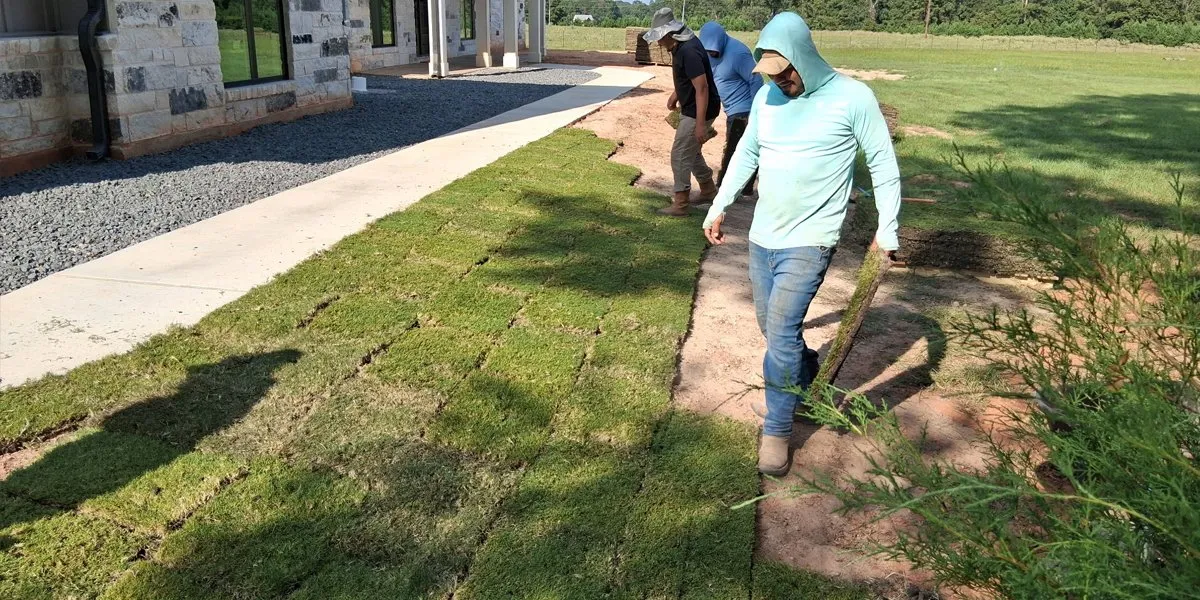
Sod installation is available in North Texas year-round — sod farms harvest and supply product through every season, and installation crews operate without significant seasonal restriction. This availability sometimes creates the impression that timing is irrelevant — that sod installed in January will produce the same result as sod installed in April or October.
The impression is incorrect. Sod installation timing dramatically affects the establishment success rate, the establishment timeline, the maintenance demands of the establishment period, and ultimately the long-term performance of the installed turf. Understanding what each seasonal window offers and what it costs helps homeowners make timing decisions that serve their specific situation rather than simply defaulting to availability.
The Best Sod Installation Window: Late Spring
Late spring — specifically April through mid-June in most North Texas years — is the highest-success installation window for Bermuda and Zoysia sod, and one of the two preferred windows for St. Augustine.
The reason is the alignment between installation timing and the biological peak of the grass's active growth phase. Sod installed in late spring arrives from the sod farm at or near peak metabolic activity — the root systems are generating new growth, the stolons and rhizomes are actively extending, and the plant's energy allocation is fully directed toward the establishment processes that produce root contact with the new soil.
This biological activity under warm soil conditions (above 65 degrees for Bermuda and Zoysia, above 70 degrees for St. Augustine) produces the fastest root contact establishment of any seasonal window — typically two to three weeks to firm root contact in appropriately prepared soil versus three to four weeks in cooler conditions. The faster establishment reduces the establishment irrigation demand period and provides the new turf with its full growing season to develop the root depth and lateral spread that determine its first-summer performance.
The trade-off of late spring installation: The first summer following a late spring installation is the most demanding establishment season. New turf without the full root depth of a mature lawn is more vulnerable to summer heat and drought stress than established turf. The establishment irrigation program must be managed carefully through the summer months to support the new root system through its first high-demand season. This is manageable — professionally installed sod with correct post-installation guidance survives and performs well through its first summer — but it requires more irrigation attention than equivalent established turf.
The Second-Best Window: Fall Installation
Fall — September through mid-November — is the second preferred installation window for North Texas sod, and in some respects the superior choice for specific situations.
Fall installation gives new sod the cooler temperatures of fall and early winter for root development before the first summer. The establishment irrigation requirement is lower because evaporation rates are lower in fall conditions. The new turf roots through fall and winter without the summer heat stress of a late spring installation, arriving at its first summer with several additional months of root development compared to a same-year spring installation.
The trade-off is the reduced active growing season before dormancy. Fall-installed sod needs four to six weeks of active growth before temperature drops push it into dormancy — installation timing in early to mid-September provides this window in most North Texas years. Late October or November installation produces minimal fall growth before dormancy and leaves the new sod spending its first winter as barely-established turf with limited root contact — a more vulnerable winter position than spring-installed turf that had a full growing season before its first dormancy.
For St. Augustine specifically, fall is arguably the preferred installation window — the grass's establishment process is supported by the moderate fall temperatures before the dormancy transition, and it avoids the peak summer heat stress that is most severe for St. Augustine relative to Bermuda and Zoysia.
Summer Installation: Higher Risk, Higher Management Demand
Summer sod installation — June through August — is performed regularly across North Texas and can succeed with intensive management, but the establishment risk is highest of any seasonal window.
The combination of high temperatures, high evaporation rates, and the demanding first-summer conditions creates an establishment environment that requires the most irrigation management and provides the least biological advantage to the newly installed turf. Soil temperatures are warm enough to support active root growth, which is an advantage, but the heat demand of transpiration during peak summer frequently exceeds what a newly establishing root system can meet — producing stress events that mature sod can recover from but new sod may not.
Summer sod installation succeeds most reliably when: the installation is in a shaded location where direct solar radiation is moderated, the irrigation program is genuinely intensive through the establishment period, and the homeowner or service team can monitor and respond to stress signals within the establishment window.
Summer installation is the appropriate choice when urgency is the priority — when a sod-free area creates an unacceptable property appearance or erosion condition that cannot wait for a fall window. It is not the appropriate choice for optional timing flexibility.
Winter Installation: Limited But Not Zero Value
Winter sod installation — December through February — occupies the most restrictive seasonal window but is not without value in specific situations.
Bermuda and Zoysia sod installed in winter is dormant or near-dormant — the active biological processes that drive establishment are largely suspended. Root contact development is minimal through the cold months, and the sod essentially waits in a dormant state for spring warm-up before establishment begins in earnest.
The value of winter installation is that it positions the sod for the earliest possible spring green-up and growing season establishment. Sod installed in January begins its establishment process the moment soil temperatures rise in March — arriving at the spring growing season with the preparation done rather than requiring installation time in early spring to be invested during the most competitive service scheduling window.
Winter installation also avoids the first-summer heat stress risk entirely — the turf has the full spring growing season to establish before its first summer, providing the best possible root depth position going into the highest-demand season.
The required caveat: Winter-installed sod that has not established firm root contact before a significant freeze event (temperatures below 20 degrees) is at higher risk of damage than established turf under the same conditions. The dormant root system has less cold hardiness than the deep, well-developed roots of an established lawn. Winter installation in the outer communities — Haslet, Rhome, Boyd — where freeze events can be more severe than in more urban areas, carries slightly more risk than the same installation in more protected locations.
How Lone Star Mow Co Advises on Installation Timing
Every sod installation that Lone Star Mow Co provides is preceded by a conversation about timing — specifically whether the homeowner's desired timing aligns with the optimal window for the grass type being installed and the specific site conditions of the property.
For homeowners with flexibility, we recommend the late spring or early fall windows that produce the most reliable establishment and the best long-term performance. For homeowners with urgent situations that require summer or winter installation, we provide the specific management guidance — installation irrigation scheduling, monitoring protocols, stress response instructions — that improves establishment success in the more challenging seasonal windows.
The goal is always a sod installation that succeeds — that establishes firmly, survives its first summer, and produces the turf quality the homeowner invested in. Timing is one of the most controllable factors that determines that outcome.

Planning a sod installation on your North Texas property? Let Lone Star Mow Co advise on timing and provide professional installation.
Serving Keller, Southlake, Haslet, Saginaw, Roanoke, and Trophy Club. Schedule your free consultation today.

Ready to Transform Your property?

Find Us On


