


The Best Plants for DFW Landscapes: What Thrives in North Texas Heat
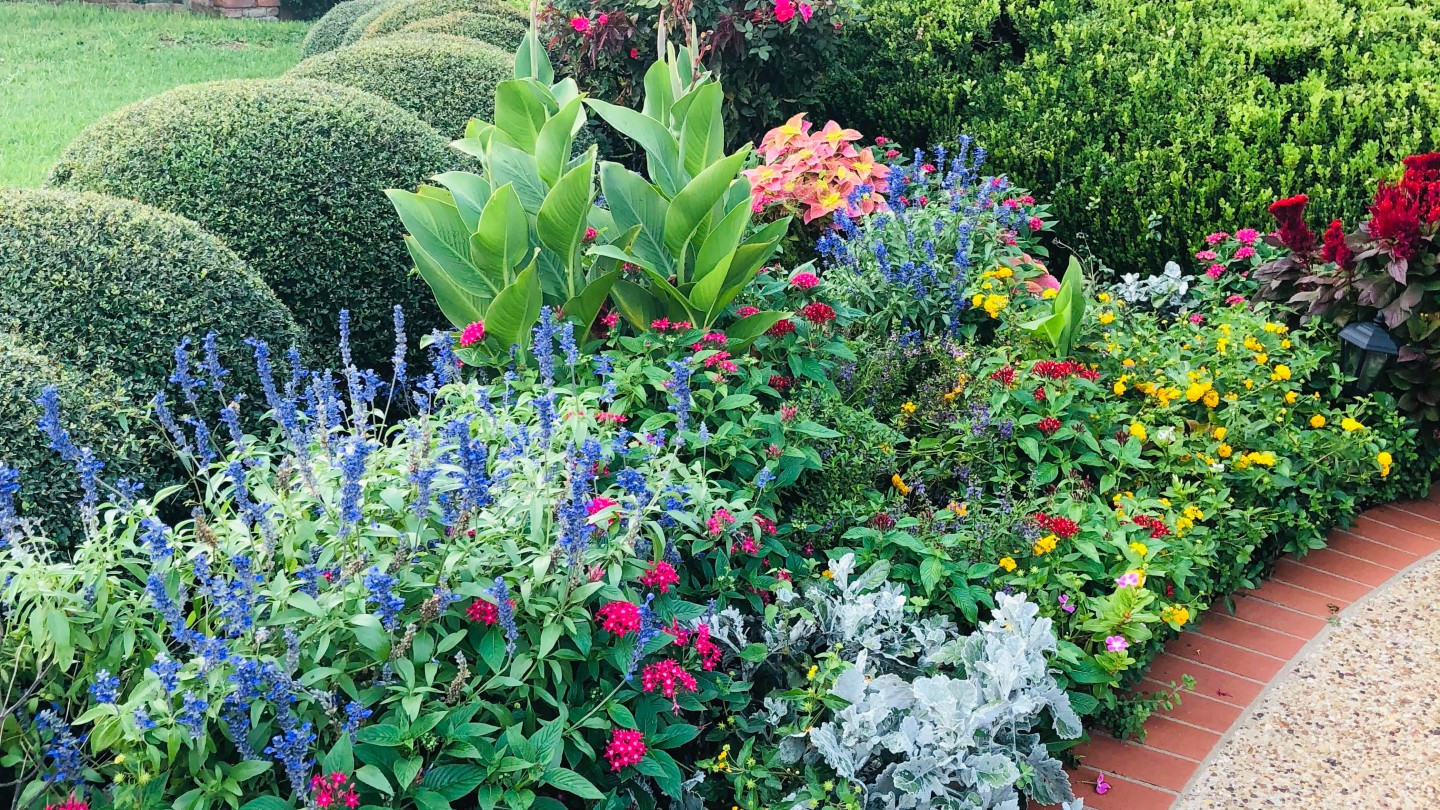
The Best Plants for DFW Landscapes: What Thrives in North Texas Heat
Every year, DFW homeowners lose money to landscape plants that looked beautiful at the nursery and dead by August. The combination of extreme summer heat, alkaline clay soil, extended drought periods, and the occasional hard freeze creates one of the most demanding plant environments in the country — and it eliminates plants that perform beautifully in cooler, wetter climates without mercy.
The plants that thrive in DFW landscapes are not the most exotic or the most visually dramatic options available. They are the ones that have been proven in North Texas conditions over multiple seasons — heat-tolerant, drought-resistant once established, able to handle alkaline clay soil, and cold-hardy enough to survive the occasional hard freeze that North Texas delivers every few years.
This guide covers the best landscape plants for DFW homeowners in Keller, Southlake, Haslet, Saginaw, Roanoke, Trophy Club, and the surrounding communities — plants that deliver genuine year-round value in North Texas conditions.
Best Flowering Shrubs for DFW Landscapes
Knockout Rose — The Knockout Rose series is the most reliable continuous-blooming shrub available to DFW homeowners. Knockouts bloom repeatedly from spring through the first hard frost, are significantly more disease-resistant than traditional rose varieties, and handle DFW heat and periods of drought with composure that standard roses cannot match. They are available in red, pink, coral, yellow, and white, and they deliver color in high-visibility areas — entry beds, foundation plantings, driveway approaches — through the entire DFW growing season.
Lantana — Lantana is a DFW landscape staple for one straightforward reason: nothing handles North Texas heat and drought better while delivering continuous color. Lantana blooms from late spring through fall, comes in yellow, orange, red, pink, and purple color combinations, attracts butterflies and pollinators actively, and requires virtually no attention once established in a full-sun DFW bed. It dies back in winter and returns reliably in spring. For a full-sun bed that needs color through the entire summer, Lantana is the most dependable choice in the DFW plant palette.
Texas Sage (Cenizo) — Texas Sage is perhaps the most perfectly adapted shrub for North Texas landscapes. The silvery-gray foliage provides visual interest year-round, the plant is virtually indestructible in dry conditions once established, and it produces stunning lavender-purple blooms in response to rainfall events through late summer and fall. Texas Sage is ideal for the south and west-facing exposures on DFW properties where summer heat is most intense and other shrubs struggle.
Best Evergreen Shrubs for Year-Round Structure
Loropetalum — The most widely planted shrub in DFW residential landscapes and one of the highest-performing. Deep purple-red foliage year-round, dramatic pink fringe flowers in late winter and spring, and genuine heat and drought tolerance once established. Available in a wide range of mature sizes from compact mounding varieties under three feet to larger selections that reach eight feet. Match the variety to the available space — one of the most common Loropetalum problems in DFW is planting a large-maturing variety in a foundation bed and spending years trying to contain it.
Yaupon Holly — Native to Texas and practically indestructible in DFW conditions. Yaupon tolerates heat, cold, drought, clay soil, and hard pruning with equal resilience. Female plants produce red berries in fall and winter. Available in standard and dwarf compact forms. One of the most reliable, lowest-maintenance evergreen shrubs available for DFW landscapes.
Indian Hawthorn — Classic DFW foundation shrub with a compact, mounding habit, attractive evergreen foliage, and white to pink spring blooms. Holds its shape well between trims, requires minimal attention once established, and is well-proven in the North Texas alkaline clay environment.
Dwarf Burford Holly — Dense, compact, and reliably evergreen with bright red berries in fall and winter. Handles full sun to partial shade in DFW conditions. Works well in formal hedge rows, foundation beds, and structured landscape placements where a consistently neat, medium-sized evergreen is needed year-round.
Best Ornamental Grasses for DFW Landscapes
Mexican Feather Grass — Fine-textured, graceful, and one of the most drought-tolerant ornamental grasses available for DFW. Golden-green in summer, takes on warm tones in fall. Creates movement and texture in landscape beds that no shrub can replicate. Full sun, excellent drainage, minimal water once established.
Gulf Muhly Grass — One of the most spectacular fall-blooming ornamental grasses in DFW. Gulf Muhly produces dramatic pink to purple flower plumes in September and October that are genuinely show-stopping in a landscape context. Green and unremarkable through summer, then spectacular in fall when most other plants are winding down. Full sun, minimal maintenance.
Lindheimer's Muhly — Tall, fountain-forming ornamental grass with white to pink late-season blooms. Creates bold structure in the landscape and handles DFW summer heat without complaint. Excellent paired with Knockout Roses and Lantana for a full-season color and texture combination.
Best Perennials for DFW Landscapes
Autumn Sage (Salvia greggii) — Heat-tolerant, hummingbird-attracting, and one of the most reliable performers in DFW landscape beds. Blooms in spring and fall with a mid-summer pause during the hottest weeks. Red, pink, coral, and white varieties available. Extremely drought-tolerant once established.
Black-Eyed Susan — Native to North Texas and the surrounding region, Black-Eyed Susan produces bright yellow blooms with distinctive dark centers from spring through fall. Extremely heat and drought tolerant, spreads reliably to fill in landscape areas, and requires virtually no maintenance once established.
Purple Coneflower (Echinacea) — Long-blooming perennial with showy purple flowers that attracts butterflies and songbirds. More heat and drought tolerant than many perennials, performs well in full sun DFW beds, and returns reliably each spring once established.
Plants to Avoid in DFW Landscapes
Equally important to knowing what works in DFW is knowing what consistently fails — despite looking appealing at the nursery or being recommended by general gardening resources that do not account for North Texas conditions.
Japanese Boxwood: While listed by some as a DFW option, boxwood is prone to root rot in the consistently wet-then-dry cycle of DFW clay soil and struggles in full sun. Better options exist for similar structural purposes.
Hydrangea: Most Hydrangea varieties are not well-suited to DFW conditions. They require consistent moisture, prefer cooler summer conditions, and are extremely heat-sensitive. The very specific variety and placement requirements for Hydrangea success in DFW make it a high-risk plant for most homeowners.
Plants labeled "full sun" in northern grower tags: Many plants labeled as full-sun tolerant in growing regions like Oregon or the Pacific Northwest are not actually equipped for the intensity of direct DFW summer sun. A plant tolerating six hours of Pacific Northwest sun and a plant tolerating eight hours of Texas July sun are experiencing completely different conditions.
Lone Star Mow Co helps DFW homeowners make smart plant selections for their specific property conditions. Every tree and shrub installation we perform starts with site assessment that matches plant choices to actual sun, soil, drainage, and space conditions — ensuring the plants we install are set up to thrive in your specific DFW landscape for years to come.

Want a DFW landscape filled with plants that actually thrive through every Texas season?
Lone Star Mow Co provides professional tree and shrub installation with plant selections proven for North Texas conditions. Schedule your free consultation today.

Ready to Transform Your property?

Find Us On


