

Weed Control in DFW Lawns: What Actually Works in North Texas
Weed Control in DFW Lawns: What Actually Works in North Texas
Weeds are one of the most consistent sources of frustration for DFW homeowners. The North Texas growing season is long, the climate is warm, and the weed species that thrive in this environment are aggressive, prolific, and — if you have been fighting them with the wrong tools and at the wrong time — seemingly impossible to eliminate. Every spring, homeowners across Keller, Southlake, Haslet, Saginaw, and the surrounding DFW communities invest in bags of weed control products, spend weekends pulling and spraying, and still end up with crabgrass in July and henbit in January.
The reason the results are disappointing is almost never lack of effort. It is timing and approach. Weed control in DFW lawns requires a specific understanding of which weeds are present, when they germinate, and which control strategies are effective against each category. Get those elements right and weed pressure becomes manageable. Get them wrong and you are perpetually reacting to established weeds instead of preventing them.
Understanding DFW Weed Categories
Effective weed control starts with understanding what type of weeds you are dealing with, because different weed categories require fundamentally different control strategies.
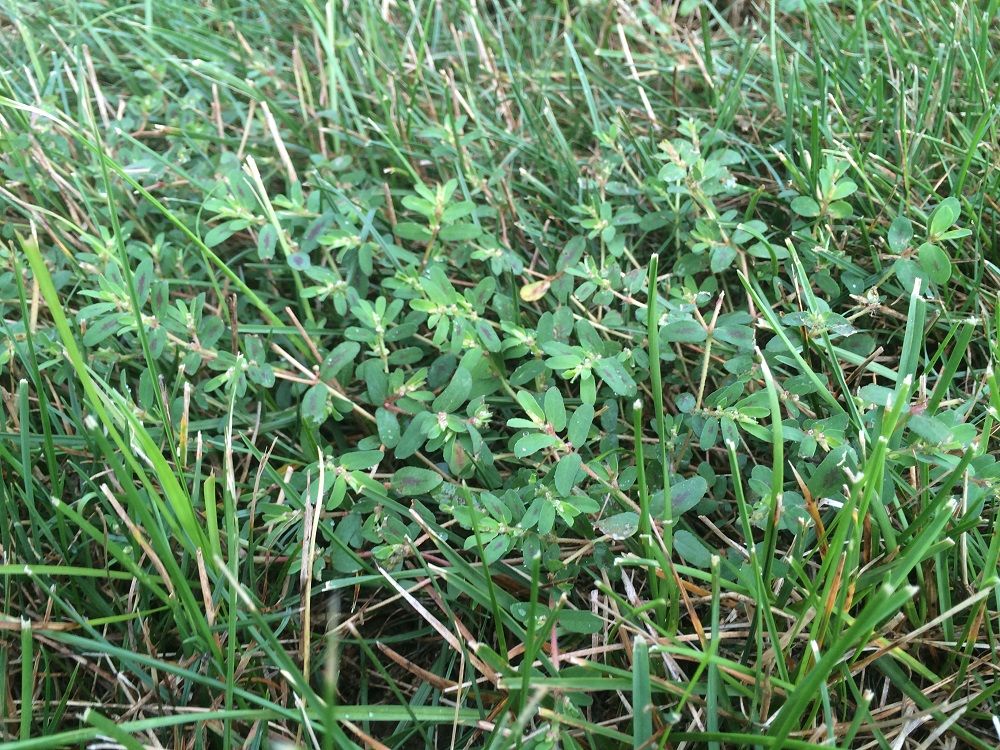
Summer annual weeds germinate in spring when soil temperatures warm, grow aggressively through the summer, and set seed before dying with the first frost. The most problematic summer annuals in DFW lawns are crabgrass, spurge, and goosegrass. These weeds have a narrow germination window in early spring — and that window is the leverage point for effective control. Pre-emergent herbicide applied before soil temperatures reach 55 degrees at a four-inch depth prevents these weeds from establishing. Once they have germinated, pre-emergent is ineffective and post-emergent treatment is required.
Cool-season annual weeds germinate in fall when temperatures cool and grow through the winter months before setting seed in spring. The most common cool-season annuals in DFW are henbit, chickweed, annual bluegrass, and rescuegrass. These weeds are controlled with fall pre-emergent application timed to when soil temperatures drop below 70 degrees — typically September to early October in North Texas.
Perennial weeds are the most difficult to manage in DFW lawns because they do not complete their life cycle and die seasonally. Nutsedge, dallisgrass, and Bermuda grass encroachment into landscape beds are the most common perennial weed problems in North Texas. These require different control strategies than annuals — repeated targeted post-emergent treatment and in some cases root-level removal — because pre-emergent does not prevent perennial weed regrowth from established root systems.
Pre-Emergent Weed Control: The Most Important Tool in DFW
Of all the tools available for weed control in DFW lawns, pre-emergent herbicide applied at the right time is the most impactful. A properly timed pre-emergent application prevents the establishment of summer annual weeds entirely — not by killing existing weeds but by preventing their seeds from germinating in the first place.
The spring pre-emergent application in DFW should target soil temperatures reaching 55 degrees at a four-inch depth, which typically occurs in February to early March in North Texas. This is weeks before most homeowners start thinking about spring lawn care — and that early timing is precisely why homeowners who wait until they see crabgrass before acting are already too late.
The fall pre-emergent application targets cool-season weed germination and should be applied when soil temperatures drop below 70 degrees — typically September to early October in DFW.
Professional lawn care services time pre-emergent applications based on actual soil temperature data rather than calendar dates, which vary year to year in North Texas. A spring that runs warm may require earlier application than a cooler spring the following year. Consistent professional monitoring of soil temperatures is what produces consistent pre-emergent results.
Post-Emergent Weed Control: Managing What Got Through
Even with properly timed pre-emergent applications, some weed pressure will always break through — particularly from perennial species that are not affected by pre-emergent and from germination in areas with thin or stressed turf where the barrier was less effective. Post-emergent herbicide is the tool for addressing established weeds after they have already sprouted.
Post-emergent selection in DFW lawns requires care because several common broadleaf herbicide ingredients — particularly 2,4-D and Dicamba — can damage St. Augustine grass if applied incorrectly. Products appropriate for Bermuda are not necessarily appropriate for St. Augustine, and using the wrong product can cause significant turf damage. Always confirm that any post-emergent herbicide is labeled for use on your specific grass type before applying.
Spot treatment of individual weeds or small weed populations is generally more effective and less damaging to the surrounding turf than broadcast post-emergent applications. A professional lawn care program targets post-emergent applications precisely — treating the weed, not the entire lawn.
Nutsedge: The Most Persistent DFW Lawn Weed
Nutsedge deserves its own section because it is consistently the most frustrating weed problem in DFW lawns and landscape beds. It is a perennial sedge — not a true broadleaf weed or a grass — that spreads through underground tubers. Pulling nutsedge at the surface does nothing permanent because the underground tuber system produces new growth almost immediately. Most standard broadleaf herbicides are ineffective against nutsedge.
Effective nutsedge management in DFW lawns requires products specifically labeled for nutsedge control — halosulfuron-methyl based products are among the most effective — applied at the right stage of nutsedge growth during the active growing season. Multiple applications across a growing season are typically required to deplete the underground tuber system. It is a process, not a single treatment.
The Healthy Lawn Defense Against Weeds
The most effective long-term weed control strategy in DFW lawns is not chemical treatment alone. It is a dense, healthy, vigorously growing turf that physically crowds out weed establishment. Thin, stressed, compacted turf is where weeds find their easiest path — bare soil between grass plants allows weed seeds to reach the soil surface, germinate, and establish before the grass can fill back in.
Everything that makes DFW lawns healthier — correct mowing height, appropriate fertilization timing, annual aeration to relieve clay soil compaction, deep and infrequent watering that encourages deep root development — also makes the lawn more resistant to weed invasion. Professional lawn care that addresses turf health as the primary strategy, with pre-emergent and post-emergent applications as supporting tools, consistently produces the lowest long-term weed pressure of any approach.
What the Hardware Store Products Cannot Do
The products available to homeowners at big-box retailers are lower concentration, less targeted, and in many cases less effective for the specific weed species common in DFW than the commercial-grade products available to professional lawn care applicators. "Weed and feed" combination products are particularly problematic — they apply nitrogen and herbicide at the same time, which is rarely the optimal timing for both applications simultaneously and can cause turf damage when applied at rates that are adequate for weed control.
Professional lawn care providers in DFW use commercial-grade pre-emergent and post-emergent products applied at correct rates with proper calibration. The results — particularly for persistent DFW weed problems like nutsedge, dallisgrass, and summer crabgrass — are measurably better than what homeowners can achieve with consumer products.
Lone Star Mow Co's professional lawn care programs for DFW homeowners include pre-emergent timing, post-emergent spot treatment, and the healthy turf foundation that makes weed control a manageable part of the annual lawn care calendar rather than an endless reactive battle. We serve properties across Keller, Southlake, Haslet, Saginaw, Roanoke, Trophy Club, and the full DFW service area.

Tired of losing the weed battle in your DFW lawn?
Lone Star Mow Co provides professional weed control and full-service lawn care for homeowners across Dallas-Fort Worth. Schedule your free consultation and let us build a program that actually works.

Ready to Transform Your property?

Find Us On


