

What North Texas Homeowners Get Wrong About Fertilizer Labels
What North Texas Homeowners Get Wrong About Fertilizer Labels
Fertilizer marketing is expert at directing homeowners toward products that look appealing rather than products that are agronomically correct for their specific lawn's conditions. "Weed and Feed" sounds efficient. "Lawn Booster" sounds powerful. "Green-Up Formula" sounds like exactly what a spring lawn needs.
The actual information that determines whether a fertilizer is appropriate for a specific North Texas lawn — the nutrient analysis, the nitrogen form, the application rate, and the guaranteed analysis section that reveals what is actually in the bag — is contained in the small print, not the product name. Most homeowners never read it. This blog covers how to read fertilizer labels correctly and what to look for when choosing fertilizer for North Texas warm-season turf.
The NPK Numbers: What They Mean
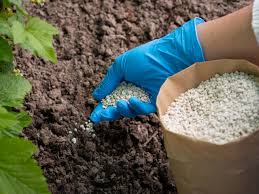
Every fertilizer label is required to display three numbers prominently — the guaranteed analysis expressed as percentages of nitrogen (N), phosphorus (P₂O₅), and potassium (K₂O). A bag labeled "28-0-10" contains 28% nitrogen, 0% phosphate, and 10% potash by weight.
Nitrogen (first number): The nutrient that most directly drives green growth, density, and color response in warm-season turf. North Texas Bermuda lawns respond visibly to nitrogen application during the active growing season. The correct nitrogen rate for a single application to warm-season turf is generally one pound of actual nitrogen per 1,000 square feet — calculated from the label by dividing 100 by the first number to determine how many pounds of the fertilizer product equals one pound of actual nitrogen per 1,000 square feet.
Phosphorus (second number): The nutrient most critical for root development in newly establishing plants. Many North Texas soils test as adequate to high in phosphorus — meaning phosphorus applications are adding a nutrient that is not deficient. For established lawns in North Texas, a zero phosphorus fertilizer (the middle number is 0) is often the most appropriate choice. A soil test confirms whether phosphorus supplementation is actually needed.
Potassium (third number): The nutrient that supports root development, disease resistance, and drought tolerance in established turf. North Texas soils vary in potassium — a soil test reveals whether supplementation is warranted. For summer stress resilience, a fertilizer with a meaningful potassium component (the third number) is more appropriate than a high-nitrogen-only product.
Slow-Release vs. Fast-Release Nitrogen: The Most Important Label Decision
The nitrogen form — whether it is water-soluble quick-release or coated/organic slow-release — is the single most important fertilizer characteristic that most North Texas homeowners overlook.
Quick-release nitrogen (water-soluble urea and similar) is immediately available to the plant, producing rapid green color response within three to five days of application. It is also washed through the soil by irrigation and rainfall more readily, meaning its effect is shorter-lived and re-application is needed more frequently. Quick-release nitrogen applied at high rates also produces the fertilizer burn streaking that results from uneven application.
Slow-release nitrogen (polymer-coated, IBDU, natural organic) releases the nitrogen gradually over weeks to months as the coating breaks down or as microbial activity converts organic nitrogen. The response is less dramatic and less immediate than quick-release — the lawn does not suddenly become brilliantly green within three days — but the sustained, steady nitrogen supply supports the consistent growth and root development that produces better long-term lawn health than the flush-and-fade pattern of quick-release nitrogen.
How to find this on the label: The guaranteed analysis section includes a line for "Water-Insoluble Nitrogen" (WIN) — nitrogen that is in slow-release form. A higher WIN percentage indicates more of the product's nitrogen is in slow-release form. Products without any WIN percentage are entirely quick-release. Products with WIN percentages of 30% or more have a meaningful slow-release component.
What "Weed and Feed" Actually Is
Weed and Feed products combine a pre-emergent or post-emergent herbicide with fertilizer, applied simultaneously in a single product. This combination is convenient but inflexible in a specific way: the correct timing for the herbicide component and the correct timing for the fertilizer component are not always the same, and applying both on a product-based schedule rather than the agronomically correct schedule for each may optimize neither.
Additionally, the fertilizer analysis in Weed and Feed products is often not the specific formulation that the lawn's current nutrient status requires — it is the formulation that accommodates the herbicide component rather than the formulation chosen specifically for the grass type and soil conditions. A homeowner who is following a Weed and Feed schedule is applying herbicide and fertilizer on a packaging schedule rather than an agronomically correct schedule.
For homeowners who want the simplicity of a single product, Weed and Feed is not harmful if applied correctly and at the right time. But it is not the most agronomically precise approach, and the correct approach is to apply pre-emergent and fertilizer separately at the specific timing that each requires.
What Lone Star Mow Co Uses and Why
Professional lawn care operations use commercial-grade fertilizer products with appropriate nitrogen form, nutrient ratios for the specific grass type and soil conditions of the service area, and application timing based on soil temperature and growth stage rather than a product schedule.
For North Texas warm-season lawns, the professional program typically uses slow-release granular products with appropriate NPK ratios for the specific application timing — different products for spring establishment, summer maintenance, and fall root development — rather than a single year-round product. The iron-containing formulations appropriate for North Texas alkaline soil are included for St. Augustine applications where iron chlorosis is a consistent challenge.
This professional product selection is not available at home improvement stores — it is the commercial-grade specification that distinguishes professional service from the consumer product options available to homeowners.

Want professional fertilization for your North Texas lawn using the right products at the right times?
Lone Star Mow Co provides professionally specified fertilization as part of the complete maintenance program. Serving Keller, Southlake, Haslet, Saginaw, Roanoke, and Trophy Club. Schedule your free consultation today.

Ready to Transform Your property?

Find Us On


