

What North Texas Homeowners Should Know About Tree Root Systems and Their Landscape Impact
What North Texas Homeowners Should Know About Tree Root Systems and Their Landscape Impact
North Texas residential landscapes are often defined by their trees — the mature Live Oaks that shade an entire backyard, the Shumard Red Oaks that provide spectacular fall color, the Cedar Elms that frame a streetscape. These trees are the most valuable and most permanent landscape elements on most established properties, and their presence transforms the outdoor environment in genuinely positive ways.
What homeowners often do not anticipate is the relationship between those trees and everything else in the landscape — the turf, the beds, the hardscape surfaces, and in some cases the foundation — through their root systems. Tree root systems are not passive underground structures. They are active, expanding, resource-seeking networks that interact with the entire landscape environment in ways that affect professional maintenance decisions across every service category.
How Tree Root Systems Actually Grow in North Texas
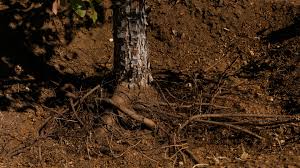
The popular image of tree root systems as deep, vertically oriented structures that mirror the visible canopy above ground is not accurate for most of the trees common in North Texas residential landscapes. Live Oaks, Shumard Red Oaks, Cedar Elms, and most other landscape trees in this climate develop primarily lateral, shallow root systems — spreading horizontally through the top twelve to twenty-four inches of soil, often extending two to three times the visible canopy spread in radius.
This shallow, lateral growth pattern is driven by where the resources are: oxygen, water, and nutrients are all most concentrated in the upper soil layers, and that is where roots grow in response to those resource gradients. The same clay soil that limits deep root penetration for grass also limits deep root development for trees — the compacted clay that makes annual aeration valuable for turf is also the condition that keeps most tree roots in the shallow zone.
The practical landscape implications of this shallow, lateral growth pattern are significant:
Surface expressions — the root ridges and humps described in the lawn leveling blog — appear as roots in the top several inches of soil expand in diameter over years. These are not removable without damaging the tree, and lawn leveling approaches for root-affected surfaces must work with rather than against the root structure.
Bed soil competition — mature trees compete with landscape plants in beds within their root radius for water and nutrients. Plants that perform well when young and when the tree is still small may begin declining as the tree matures and its root system expands into the bed soil, creating competition that the smaller plants cannot sustain under drought stress.
Turf thinning under mature canopy — the combination of shade from the canopy and root competition from the expanding root system creates progressively more challenging conditions for grass under mature trees. Bermuda begins thinning as shade increases. Even shade-tolerant grasses experience water competition stress during drought periods when the tree's large root system is drawing down soil moisture faster than the smaller grass root system can access it.
Root Competition and Landscape Bed Management
Understanding tree root competition changes how landscape beds under and near mature trees should be managed.
Beds directly under mature Live Oaks and other large shade trees have the highest root competition density — the area immediately adjacent to the trunk and extending outward under the canopy is where root density is greatest. Plants installed in these high-competition zones need to be species that tolerate both shade and root competition — shade-adapted groundcovers, select hostas in appropriate microclimates, and landscape species that are genuinely drought and competition tolerant.
More importantly, beds in high-root-competition zones need more frequent irrigation and more attention to mulch depth than equivalent beds without root competition. The tree's root system draws down soil moisture more rapidly, making the moisture retention function of adequate mulch depth more important in these beds than elsewhere on the property.
Professional bed cleanout work under mature trees in North Texas is also more labor-intensive than in root-free beds because Bermuda grass and other weeds that establish in these beds develop roots that are physically intertwined with the tree root network — removing them requires careful hand work rather than the more aggressive cultivation appropriate for beds without active tree root systems.
Foundation Proximity and Root Management
The relationship between tree root systems and North Texas foundations is one of the most practically important considerations in residential landscape management — and one that homeowners often do not think about until a problem has developed.
The same clay soil expansion and contraction that drives foundation movement in North Texas is significantly influenced by tree root systems when trees are planted close to the structure. Tree roots actively extract moisture from the soil, creating the drying and contraction that the foundation engineer's guidance on maintaining uniform moisture around foundations specifically aims to prevent. A large Live Oak planted fifteen feet from a foundation can draw down soil moisture from the foundation perimeter during summer drought in ways that affect the foundation's underlying soil conditions.
This does not mean trees close to foundations must be removed — Live Oaks are among the most valuable landscape assets on any North Texas property and their removal is almost never the right recommendation. It means that irrigation management near the foundation of properties with large shade trees needs to account for the moisture draw of those root systems — maintaining the consistent moisture levels around the foundation that prevent the differential shrinkage that drives movement.
Mulch rings around trees that extend to the drip line help maintain soil moisture consistency in the root zone and moderate the extreme wet-dry cycling that drives moisture competition. This is one of the landscape maintenance practices that serves multiple simultaneous functions: tree health, soil moisture conservation, and foundation protection.
Implications for Aeration Near Mature Trees
Core aeration near the root systems of mature trees requires awareness of the root density and depth in the specific area being aerated. Commercial core aerators pull three to four inch plugs of soil — adequate depth for lawn aeration purposes, but also sufficient to damage fine feeder roots in areas of very high root density directly under the canopy of large mature trees.
For most North Texas properties, core aeration of the full lawn surface — including the areas under and near mature trees — is appropriate and beneficial. The aeration channel depth of three to four inches is significantly shallower than the structural root system, and the damage to fine feeder roots from aeration is modest and quickly recovered by the root system.
However, for trees with visible surface root expressions — where main root stems are partly at or above the soil surface — aeration directly over these roots is not appropriate. Standard core aerators can damage the structural integrity of surface-exposed roots. In these areas, the lawn aeration program is applied to the areas between visible surface roots rather than directly over them.
How Lone Star Mow Co Manages Tree-Related Landscape Challenges
Every professional service Lone Star Mow Co provides on properties with significant tree coverage includes awareness of the root system effects described above.
Bed cleanout work under mature trees is performed with the hand care that the root competition and physical root presence in the bed soil requires. Mowing patterns near trees with surface root expressions are adjusted to avoid the scalping and mower contact with surface roots that creates both tree damage and turf stress. Mulch rings around trees are maintained as part of our professional landscape maintenance rather than treated as optional additions. And our lawn leveling assessments distinguish between grade changes that can be corrected with topdressing approaches and root-caused surface expressions that require the grade-building approach that avoids root damage.
Mature trees are landscape assets worth protecting — and professional maintenance that understands their root systems protects rather than inadvertently damages the trees that make established North Texas properties genuinely valuable.

Have mature trees affecting your lawn and landscape maintenance on your North Texas property?
Lone Star Mow Co provides professional maintenance with the local knowledge to manage tree root system challenges correctly. Serving Keller, Southlake, Haslet, Saginaw, Roanoke, and Trophy Club. Schedule your consultation today.

Ready to Transform Your property?

Find Us On


