

What Topdressing Is, Why It Works, and How to Know If Your North Texas Lawn Needs It
What Topdressing Is, Why It Works, and How to Know If Your North Texas Lawn Needs It
Topdressing is referenced throughout this blog series as the companion to annual core aeration — and for good reason. The combination of aeration and topdressing is the most effective ongoing soil health management program available for North Texas residential lawns. But the topdressing component is less intuitively understood than aeration, and the questions homeowners most frequently ask about it deserve direct, complete answers.
What Topdressing Is
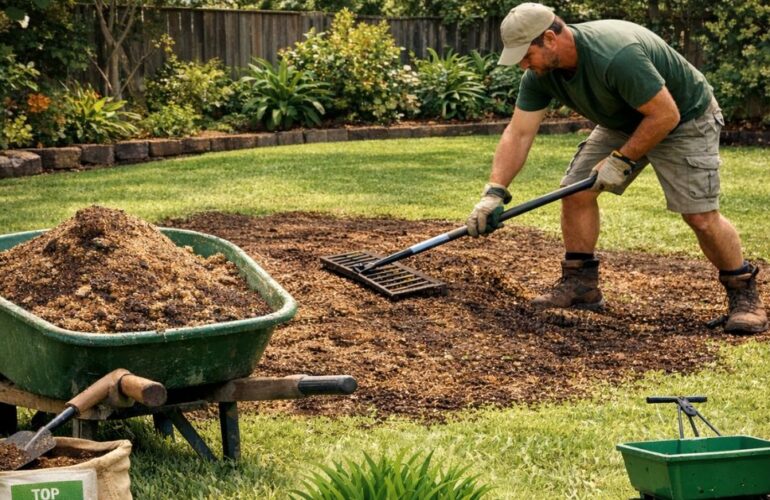
Topdressing is the application of a thin layer of material — typically compost, compost-sand blend, or sand depending on the specific soil management objective — spread evenly across the lawn surface after aeration. The material layer is typically one-quarter to one-half inch deep — thin enough to settle into the aeration holes and integrate with the existing soil and thatch layer, rather than thick enough to cover the grass blades.
The key word in the description above is "after aeration." Topdressing applied to an unaerated lawn surface sits on top of the thatch and grass blades without a means of soil contact — it washes, blows, or is mowed away before delivering meaningful benefit. Topdressing applied immediately after aeration has the open channels of the aeration holes to enter the soil profile and the disrupted thatch layer to incorporate into. The combination is what makes the treatment effective.
What Topdressing Does
Organic matter addition is the primary benefit of quality compost or compost-blend topdressing in North Texas lawns. The compost material introduced through topdressing after aeration is the fastest effective method for adding organic matter to the soil profile of an existing lawn without disturbing the turf surface. Tilling organic matter into lawn areas destroys the turf. Topdressing after aeration adds organic matter through the least invasive means possible, delivering it into the soil profile rather than sitting on the surface.
Over consecutive years of annual aeration and compost topdressing, the organic matter content of the treated soil increases measurably — producing the moisture retention, biological activity, and structural improvements that the organic matter blog describes in detail.
Thatch management is the second functional benefit. The compost material introduced into the thatch layer through topdressing brings soil microorganisms into the thatch environment that actively decompose the accumulated organic material. This biological activity in the thatch layer is the mechanism through which consistent annual aeration and topdressing gradually reduces thatch accumulation — the microbes processing the thatch material rather than allowing it to build to the problematic levels described in the thatch blog.
Leveling minor surface irregularities is a third benefit of topdressing — the material fills shallow depressions and irregularities in the lawn surface without the disruption of mechanical leveling. Over several years of consistent topdressing, shallow depressions that are not drainage-related gradually fill in and the overall surface uniformity improves. This is not a substitute for professional lawn leveling of meaningful grade issues — it is a maintenance benefit for the shallow surface variation that accumulates over time from normal soil settling.
The Material Matters: What Quality Topdressing Uses
The benefit of topdressing is directly affected by the quality of the material applied. This is the component of topdressing that homeowners most benefit from understanding before purchasing materials or evaluating a service.
Quality compost — mature, dark brown, fine-textured material that has completed the thermophilic (hot) composting phase and cooled to ambient temperature — is biologically active, weed-seed-free, and provides immediate benefit when incorporated into the soil profile. Immature compost (hot, strong-smelling, not yet fully decomposed) can harm grass plants when applied at topdressing volumes. The material should be dark, earthy-smelling, and cool to the touch.
Compost-sand blends are appropriate when both organic matter addition and physical soil structure improvement are the objectives — the sand component improves the drainage and aeration characteristics of heavy clay soil at the surface level while the compost component provides the biological and nutrient benefits. The ratio of compost to sand in the blend is important — very high sand ratios without adequate compost provide physical structure improvement without biological benefit.
Pure sand topdressing — sometimes recommended for golf course applications to maintain specific playing characteristics — is inappropriate for most North Texas residential lawns. Sand applied to a clay-soil lawn without the organic matter that improves clay structure does not improve the clay; it creates a stratified soil profile that behaves differently from either the clay below or the sand above, often producing drainage problems rather than improving them.
How to Know If Your North Texas Lawn Needs Topdressing
Every North Texas lawn that has not received consistent annual aeration and topdressing for the past three to five years benefits from incorporating topdressing into its annual service program. The starting soil conditions of most North Texas residential properties — compacted construction clay with minimal organic matter — are below the productive soil quality threshold that topdressing helps build toward.
Specific indicators that suggest topdressing is particularly needed:
The screwdriver test shows resistance at three inches or less after irrigation — indicating compacted soil with low organic matter that limits root penetration.
The lawn browning quickly between irrigation events even when neighboring lawns maintain acceptable moisture conditions — indicating low moisture retention capacity that improved organic matter content would address.
Brown patch or other fungal disease pressure that recurs annually despite correct irrigation timing — the improved soil biological activity from consistent topdressing creates more competitive conditions against fungal pathogens than the biologically inactive starting condition supports.
Annual aeration without topdressing — if a lawn has been aerated consistently but without topdressing, the compaction relief benefit of aeration is being delivered but the organic matter building that makes aeration most impactful is not. Adding topdressing to the existing aeration program delivers meaningfully better soil improvement outcomes.
How Lone Star Mow Co Provides Topdressing
Every aeration service Lone Star Mow Co performs is followed by the topdressing application that makes the aeration most impactful. We apply quality compost or compost-sand blend material at the appropriate rate for the specific soil conditions of each property — typically one-quarter to one-half inch layer spread evenly across the aerated surface and worked lightly into the aeration holes.
For new clients whose soil starting conditions are particularly poor, we may recommend two applications in the first season — spring and fall — to accelerate the soil improvement trajectory before transitioning to the single annual application that is appropriate for maintenance of improving soil conditions.

Want to start building the soil health that makes everything else in your North Texas lawn work better?
Lone Star Mow Co provides professional aeration and topdressing for homeowners across Keller, Southlake, Haslet, Saginaw, Roanoke, and Trophy Club. Schedule your free consultation today.

Ready to Transform Your property?

Find Us On


