


Why Your Landscape Beds Always Seem to Be Losing the Battle Against Bermuda Grass
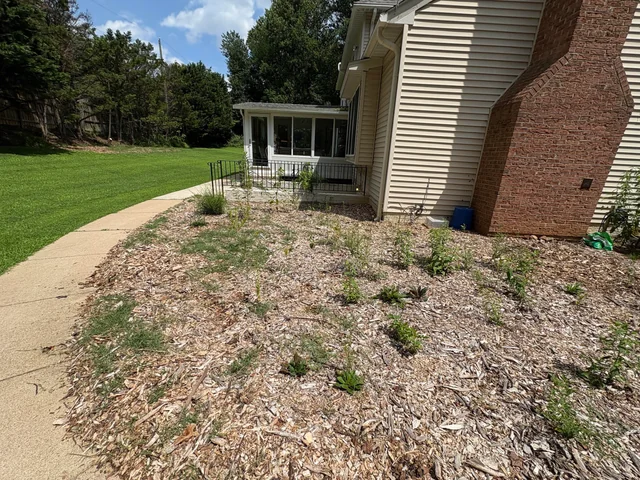
Why Your Landscape Beds Always Seem to Be Losing the Battle Against Bermuda Grass
Ask any homeowner with Bermuda grass in North Texas what their most frustrating ongoing maintenance problem is, and a significant percentage of them will describe the same thing: Bermuda grass in the landscape beds. The runners crossing over the bed edge. The rhizomes burrowing through the mulch layer. The Bermuda stolons wrapping around the base of shrubs and flowering plants, competing for water and nutrients in the beds that the installed plants are supposed to be thriving in.
This frustration is universal, consistent, and for many homeowners, feels permanent — because the standard approaches most people apply to the problem produce temporary results at best. Pull the Bermuda runners out of the beds, and they are back within weeks. Apply broadleaf herbicide, and the Bermuda ignores it. Apply pre-emergent, and it has no effect on the established rhizomes already in the bed.
Understanding why Bermuda grass invades landscape beds as aggressively as it does in this climate — and understanding what actually controls it versus what merely manages it temporarily — is the foundation of a realistic approach to the problem. This blog covers both.
Why Bermuda Is Uniquely Aggressive as a Bed Invader
Bermuda grass is the most planted warm-season turf in North Texas for good reasons — heat tolerance, drought resistance, rapid establishment, and the ability to fill in bare areas faster than almost any other turf species. The same characteristics that make it an excellent lawn grass make it an extraordinarily difficult to contain neighbor to landscape beds.
The specific mechanism of Bermuda's bed invasion is its dual spreading system. Above-ground stolons — the runners that are visible on the lawn surface — extend horizontally across the bed edge and into the bed soil, rooting at each node they contact and establishing new plants throughout the bed area. These are what most homeowners notice and pull.
Below-ground rhizomes — the underground stems that extend through the soil below the surface — are less visible but equally significant. Bermuda rhizomes extend horizontally through the top two to four inches of soil, producing new shoots at intervals along their length. A rhizome that extends twelve inches into a landscape bed from the lawn edge produces new Bermuda plants at several points along its length — and removing the visible new plants does not address the rhizome network still in place beneath the soil surface.
This two-pathway invasion system — above-ground stolons and below-ground rhizomes advancing simultaneously — is what makes Bermuda bed encroachment so difficult to control through pulling and surface removal alone. Every plant removed from the surface leaves a rhizome network in place that regenerates the plants within two to four weeks. This is why homeowners who pull Bermuda from their beds regularly never fully solve the problem — they are addressing the visible symptom rather than the underground root cause.
Additionally, Bermuda produces viable seed that is distributed across bed areas, providing a third invasion pathway that does not require physical contact between the lawn edge and the bed. Wind, bird activity, and irrigation distribution all move Bermuda seed into bed areas where it can germinate and establish independent of the rhizome and stolon network advancing from the lawn edge.
What Does Not Work — and Why Homeowners Keep Doing It Anyway
The persistence of ineffective Bermuda control approaches is understandable — most homeowners do not know what else to try, and the temporary improvement from pulling and surface removal creates the impression that the approach is partially working. It is not working. It is providing cosmetic improvement while the rhizome network in the soil continues expanding.
Pulling Bermuda runners from the surface is the most labor-intensive and least effective approach to bed encroachment. It removes the visible above-ground material while leaving the below-ground rhizome network entirely intact. The new plants that emerge from those rhizomes in the following weeks are not new invasion — they are the same established Bermuda plant regenerating from its underground structure. Repeated pulling over a season may actually expand the rhizome network by stimulating compensatory root production in response to the above-ground removal.
Standard broadleaf herbicide (2,4-D, triclopyr, and related products) has no effect on Bermuda grass. Bermuda is a monocot — a narrow-bladed grass — and broadleaf herbicides target plants with broad, flat leaves. Applying a broadleaf herbicide to a Bermuda invasion accomplishes nothing except potentially harming other plants in the bed that are susceptible to those products.
Pre-emergent herbicide does not control established Bermuda. Pre-emergent works by preventing seed germination — it has no effect on the rhizomes and stolons of established plants. Bermuda bed invasion is almost always from established plants, not from seed. Pre-emergent applications do not address the primary invasion pathway.
What Actually Controls Bermuda in Landscape Beds
Effective Bermuda bed control requires addressing both the above-ground and below-ground components of the invasion — and in most cases, requires the combination of physical removal, targeted herbicide, and consistent preventive mechanical edging that together create a sustainable management program rather than a temporary fix.
Targeted grass-selective herbicide is the most effective tool for chemical control of Bermuda in landscape beds. Products containing fluazifop-P-butyl (sold under brand names including Ornamec, Fusilade, and others) or sethoxydim (sold as Poast and others) are selective grass killers — they control Bermuda and other grasses without damaging most broad-leaved plants and shrubs. Applied correctly to actively growing Bermuda tissue, these products are translocated into the root system and kill the rhizome network rather than just the above-ground material.
Important application notes: these products work most effectively when applied to actively growing Bermuda in warm temperatures — spring through early fall is the appropriate application window. Repeat applications two to three weeks apart are typically needed because a single application may not penetrate the entire rhizome network, and subsequent applications address regrowth from rhizomes that survived the first treatment. Always confirm that any herbicide applied in a bed is labeled for use around the specific plants present — most of the grass-selective products are labeled for use around established ornamentals but may have restrictions on specific species.
Manual removal of the rhizome network is the physical complement to chemical control. After a grass-selective herbicide has killed the above-ground tissue and moved into the root system, excavating the rhizome network from the bed soil removes the majority of the material that could regenerate. This is labor-intensive work — rhizomes may extend through the full depth of the mulch layer and into the top several inches of bed soil — but doing it thoroughly after herbicide treatment rather than pulling live Bermuda from uncontrolled beds is significantly more effective because the herbicide-treated material has reduced regrowth capacity.
Consistent mechanical bed edge maintenance is the preventive tool that limits the rate of reinvasion after the existing Bermuda has been addressed. Clean, deep bed edging — cutting a sharp vertical line through the turf edge at the bed boundary — severs the stolon and rhizome material at the edge, removing the pathway for above-ground runners to enter the bed and slowing the rate at which the below-ground rhizome network re-advances.
This bed edge maintenance must be consistent — done every professional maintenance visit during the growing season rather than occasionally — because Bermuda advances continuously through the warm months. A bed edge that is cut cleanly in April needs attention again in May and every subsequent month through October or the runners and rhizomes will be reestablishing in the bed before the previous intervention has produced lasting results.
This is exactly what Lone Star Mow Co includes in every maintenance visit: mechanical bed edge maintenance as a standard component, every visit, every season. The consistency of that maintenance is what produces the visible, maintained definition at the bed edge that homeowners in well-managed properties have — and that properties with intermittent service or self-managed maintenance struggle to achieve.
The Role of Mulch in Bermuda Bed Management
Mulch at the correct depth — two to three inches of quality cedar or hardwood mulch — creates a physical layer that above-ground Bermuda stolons must navigate before reaching the bed soil. While it does not stop below-ground rhizomes (which move through the soil below the mulch layer), it slows above-ground stolon advance and raises the above-ground Bermuda enough above the soil surface that it is visible and accessible for removal before it roots and establishes new plants in the bed.
The weed barrier fabric that is commonly sold as a Bermuda control solution under mulch is worth addressing specifically because it is widely used and consistently disappointing in practice. Landscape fabric blocks below-ground Bermuda rhizomes from advancing through the fabric barrier initially — but as the fabric ages, degrades, and shifts over seasons of use, Bermuda eventually penetrates it. More problematically, the rhizomes that do penetrate through the fabric become physically entangled with the degraded fabric material, making removal far more difficult than if the fabric had not been installed. Long-term, landscape fabric under mulch in Bermuda-edge beds creates more maintenance difficulty than it solves. Professional landscape installation avoids it for exactly this reason.
Professional Bed Cleanout: The Reset That Makes Management Sustainable
For beds that have been invaded by Bermuda for multiple seasons without adequate control, the practical starting point is a professional bed cleanout that addresses the accumulated invasion more thoroughly than routine maintenance can.
A professional spring or fall bed cleanout from Lone Star Mow Co includes removal of all visible Bermuda runners from the bed surface, excavation of rhizome material from the bed soil as thoroughly as accessible, re-edging of the bed boundary with a mechanical edger to restore the clean, deep cut that limits stolon access, and fresh mulch installation that refreshes the physical barrier layer. For beds with severe invasion, we may recommend a grass-selective herbicide treatment in conjunction with the physical cleanout to address the rhizome network more completely than manual excavation alone can achieve.
This reset, followed by the consistent bed edge maintenance that is part of every subsequent maintenance visit, produces a sustainable management program that keeps Bermuda encroachment under control rather than allowing it to cycle from tolerable to problematic and back with each season.

Is Bermuda grass winning the battle against your landscape beds? Lone Star Mow Co provides professional bed cleanout and consistent maintenance that actually keeps it controlled.
Serving homeowners across Keller, Southlake, Haslet, Saginaw, Roanoke, and Trophy Club. Schedule your free consultation today.

Ready to Transform Your property?

Find Us On


